
Its (Marxism’s) importance lies not only in the interpretation of the past, but as a guide to future action. By its correct use, men can make their own history consciously, rather than suffer it to be made as helpless spectators, or merely to study it after the event.
– D. D. Kosambi (Exasperating Essays: Exercises in Dialectical Method, 1957)
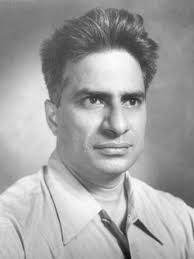
D. D. Kosambi used Marxism as an analytical framework and scientific approach to study science and society. Following Lenin’s idea of concrete analysis of concrete conditions of society, he used dialectical and historical materialism creatively for studying the history of India. He showed that Indian society had its own trajectory, and European historical categories could not simply be imposed here, and established a non-Eurocentric Marxist interpretation of Indian history. He showed how Indian society developed through internal contradictions between productive forces and production relations, and between old and new social forms. He criticised Nehru’s book ‘The Discovery of India’ (1946) for a shallow reading of history. He also criticised S.A. Dange’s book ‘India from Primitive Communism to Slavery’ (1949), arguing that Dange treated Marxism not as a method of investigation but as a ready-made formula. Instead of investigating, Dange began with a preconceived scheme of historical stages and searched ancient Indian texts for quotations that appeared to fit that scheme, ignoring regional diversity and historical complexity. This critique later became central to debates about how to apply historical materialism to the study of history and helped shape the development of modern Marxist history-writing in India.
Science, Scientific Temper, and Human Emancipation
There is no reason for science to remain bound any longer to the decaying class that brought it into existence four centuries ago. The scientist needs this freedom most of all, namely freedom from servitude to a particular class. Only in science planned for the benefit of all mankind, not for bacteriological, atomic, psychological, or other mass warfare can the scientist be really free.
– D. D. Kosambi [Science and Freedom, Monthly Review (New York), vol.4, 1952]
D. D. Kosambi was respected internationally as a mathematician before becoming widely known as a historian. He developed important mathematical concepts in both pure and applied mathematics (e.g., the Kosambi-Karhunen-Loève transform). He taught mathematics at BHU, AMU, Fergusson College, and TIFR. He was deeply interested in applying mathematics to practical scientific problems and was one of the first Indian scholars to combine advanced mathematics with humanities research. One of Kosambi’s most original contributions was introducing quantitative methods into the study of ancient coins. Using statistics, he developed the ‘Kosambi mapping function’, which revolutionised genetics. His statistical work on the seasonal death rate resulted in the saving of a considerable number of lives. His expertise in mathematics, statistics, probability, and data analysis enabled him to make important contributions to physics (e.g., the Kosambi-Cartan-Chern (KCC) Theory). Like his pioneering contributions to history, Kosambi’s work in mathematics and science was far ahead of its time. Many of his works were later rediscovered by other scientists and mathematicians (e.g., Proper Orthogonal Decomposition and Principal Component Analysis, which form the basis of machine learning and artificial intelligence, were first developed by Kosambi).
D. D. Kosambi’s scientific outlook was dialectical, and he argued that science itself develops within historical and social conditions. He frequently wrote about the social functions of science. He said that scientific knowledge without social responsibility could become catastrophic. The resources that could eliminate poverty, disease, and illiteracy will instead be directed towards weapons production and the war industry. He admired the development of science and technology in the USSR and China after the revolution. He criticised bourgeois science and argued that science under capitalism is subordinate to war and profit, whereas under socialism it could serve humanity collectively. As a major advocate of scientific temper, he strongly opposed pseudoscience, mysticism, communalism, irrationalism, and blind glorification of tradition.
As a Marxist, Kosambi was deeply concerned about the social and political consequences of modern science. He believed that intellectuals could not remain politically neutral. For him, freedom did not mean liberal individualism detached from society, but collective human development and the end of exploitation. After the atomic bombings of Hiroshima and Nagasaki, he criticised the military use of nuclear science, arguing that scientific discoveries should serve humanity rather than destruction, and became involved in anti-imperialist, anti-fascist, and peace movements. He was a member of the World Peace Council, a left-leaning organisation of intellectuals, scientists, writers, and anti-colonial thinkers.
China: An Example of Revolutionary Transformation
No honest and reasonably alert visitor to China can fail to be impressed by the remarkable changes in the country and the people. The material advances shown by the new system since so recent a year as 1952 leap to the eye. New factories, mines, oil fields, steelworks, dams, co-operatives, roads, buses, hospitals, schools, cultural palaces, theatres have sprouted virtually overnight. Literacy is almost universal and the language is being reformed. The rise in the general standard of living is equally remarkable. The normal noonday meal even of the unskilled labourer now compares with his rare holiday feast in the old days. Conditions of work have improved out of all recognition.
– D. D. Kosambi [On The Revolution in China, Monthly Review (New York), 1957]
D. D. Kosambi viewed the Indian freedom movement and the post-1947 development model dialectically. He criticised the Indian National Congress and the leadership of Gandhi and Nehru for representing the class interests of the bourgeoisie. He also criticised the CPI leadership for not understanding the Indian society dialectically and applying the methods of revolution in Europe directly to India without considering the feudalism and agrarian question as primary. He viewed British colonialism not merely as foreign rule but as an economic and structural system, which destroyed the indigenous industrial development and strengthened feudalism, and any true freedom movement is not possible without an agrarian revolution. He believed that 1947 marked the end of direct British colonial rule but did not fundamentally transform Indian society. The oppressive social structures remain unchanged. He called it a transfer of political power without a social revolution. This became central to his critique of post-independence India and the Nehruvian model of development and modernisation. He argued that Nehru attempted modernisation without fundamentally transforming class relations. He criticised India’s modernisation as a slow, bureaucratic, elite-driven, and socially limited process serving the class-interests of capitalists and landlords.
D. D. Kosambi considered the Chinese Revolution (1949) as a model for transformative change in Asian society. He showed that revolutionary changes in China contrasted sharply with the extreme poverty and social inequality still visible in India during the same period. He visited the People’s Republic of China several times after its establishment in 1949. He was deeply impressed by what he saw, calling it an example of socialism, development, modernisation, and postcolonial transformation for Asian countries. He was astonished seeing how socialist construction had transformed a poor Asian country devastated by war and semi-colonial domination. He was especially impressed by literacy campaigns, mass education, and social consciousness. The Chinese Revolution demonstrated that radical transformation towards socialism was historically possible in Asia. He defended the Chinese Revolution against critics who dismissed or ignored it. He argued that many critics failed to understand that revolutions in Asian peasant societies would necessarily differ from European revolutionary models. For Kosambi, science without a social purpose was an empty pursuit His work serves as a reminder that the highest duty of an academician is not merely to interpret society but to illuminate its contradictions, defend scientific inquiry, and contribute to the struggle for a more just, democratic, and humane world.