
History is the development in chronological order of successive changes in the means and relations of production.
– D.D. Kosambi (History and Society)
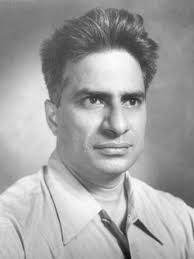
Very few intellectuals have left as profound a mark on Indian scholarship as Damodar Dharmanand Kosambi (31 July, 1907–29 June, 1966). Mathematician, historian, philologist, statistician, numismatist, and Marxist thinker, Kosambi belonged to that rare generation of scholars whose work transcended disciplinary boundaries. His work fundamentally transformed the way we understand the Indian past. While editing the Sanskrit literary works of Bhartṛhari, he became interested in ancient Indian history. At a time when Indian history was largely dominated by either colonial narratives or nationalist glorification, Kosambi introduced a rigorous, scientific, materialist approach to historical inquiry. He shifted attention from kings, dynasties, and battles to the lives of ordinary people, the evolution of productive forces and production relations, and the complex interaction between economy, culture, and ideology.
Materialist Analysis of Indian History
Colonial historians largely portrayed India as a civilisation without history, ruled by despotic rulers and characterised by stagnant social structures. Nationalist historians challenged these prejudices but often replaced them with narratives centred on great kings, glorious empires, and cultural achievements. In both approaches, history remained primarily the story of rulers, dynasties, and wars. Kosambi revolutionised the methodology of historical research by applying Marxism and an interdisciplinary method, which was unprecedented in Indian historical scholarship. He rejected reliance on literary texts alone and argued that historians must draw on multiple sources, such as archaeological remains, coins, inscriptions, folklore, village customs, linguistic patterns, ecology, etc., for valuable clues about the past. He argued that history should not be confined to the actions of kings and elites but should focus on the development of society as a whole. He sought to reconstruct the history of ordinary people. For him, the central questions of history were: How did people produce their means of livelihood? How were resources distributed? How did social classes and castes emerge? What material conditions gave rise to religious beliefs, political institutions, and cultural practices?
D.D. Kosambi was the first to apply historical materialism to the study of Indian society and to develop the subject from Indology into a Social Science. Some of his major contributions have been summarised in the following sections:
Kosambi’s theory of Indian feudalism
One of the most influential aspects of Kosambi’s work was his theory of Indian feudalism. He emphasised that Indian feudalism differed from European feudalism as India lacked certain characteristic features of European medieval society. He argued that after the decline of urban centres and long-distance trade following the Gupta period, Indian society experienced increasing ruralisation and localisation. Land grants to Brahmins, officials, and military elites became widespread. These grants fragmented political authority, weakened centralised administration, increased agrarian dependency, and promoted localised power structures, leading to the emergence of feudal tendencies.
Historical Emergence of Caste
One of the major contributions of Kosambi was his treatment of caste and religion as historical phenomena rather than eternal institutions. Earlier historians often described caste as an unchanging feature of Indian civilisation. Kosambi argued that caste was not merely a religious doctrine, racial difference, or eternal Hindu tradition. Instead, caste developed historically through the division of labour, agrarian systems, control of land, social stratification, and surplus extraction. Kosambi demonstrated that caste evolved over time and was closely linked to changing economic and social conditions. Similarly, he interpreted religious traditions not merely as systems of belief but as products of concrete historical circumstances. Kosambi argued that caste evolved partly through the absorption of tribes into agrarian society. When tribes were incorporated into expanding agriculture, each group acquired a fixed socio-economic role, which later developed into caste.
Historical Numismatics
D.D. Kosambi’s contribution to numismatics (the study of coins and currency) played a crucial role in shaping the approach to the study of Indian history. While traditional numismatists often focused on identifying kings and dynasties, classifying coin types, and establishing chronologies, Kosambi’s innovative approach considered coins as scientific evidence for reconstructing economic and social history. His contribution to numismatics lies in demonstrating how coins can be used to reconstruct the history of ordinary economic life, making numismatics an integral part of modern historical research. Kosambi’s most important numismatic work concerned ancient Indian punch-marked coins, among the earliest coins used in the Indian subcontinent. Kosambi applied mathematical and statistical methods to numismatics by carefully measuring the weight distributions, metal content, patterns, and frequencies of different types to identify patterns that individual specimens could not reveal. Identifying that coins lose tiny amounts of metal through circulation, he attempted to estimate relative periods of circulation, trade intensity, and economic activity. Kosambi used coin finds to reconstruct ancient trade routes and economic life.
Marxist School of Indian Historiography
Kosambi was the first historian to systematically apply Marxist historical analysis to study Indian society. He founded modern Marxist historiography in India by introducing materialism into the study of Indian history. He did not mechanically impose European historical models on Indian society; instead, he applied Marxism to Indian conditions, paying close attention to the distinctive features of Indian society. His work demonstrated that Indian history could be studied scientifically without reducing it to either colonial stereotypes or nationalist myths. He introduced concepts such as the study of modes of production, class relations, agrarian structures, and the social roots of culture, which became central to historical research. He laid the foundations for modern social and economic history in India and influenced generations of historians, including R. S. Sharma, Romila Thapar, Irfan Habib, and many others.
Kosambi’s contribution was not merely the addition of new facts to historical knowledge, but the creation of a new method of studying history. Using Historical Materialism, he reconstructed the development of Indian society. His pioneering works challenged the entrenched assumptions and opened new avenues for understanding caste, class, religion, state formation, and social change in the Indian subcontinent. In an era marked by the saffronization of history, the spread of historical myths, and growing attacks on scientific and rational ideas, his insistence on evidence-based study of the past continues to resonate.