
In the social context, when it comes to the process of organising the masses, imbuing them with revolutionary ideas, consolidating the vanguard class into a revolutionary party, rallying the broad masses on the call of a radical change, and carrying forward the process of a socialist construction, the correct handling of contradictions gains supreme significance. This understanding of contradictions form the very basis of Marxist philosophy i.e. dialectical materialism. Otherwise stated, unless one understands the law of unity of opposites inherent in every system they cannot even imagine to change it. Every thing or system is in a state of constant motion precisely due to contradictions inherent in it creating the internal content of the process of development. This is true for both nature and society.
Comrade Mao teaches us that in any situation it is very important to distinguish the contradiction among the people to that between the people and the enemy. Who the people are and who the enemies are may differ from place-to-place and time-to-time. It is determined by the prevailing fundamental contradictions in a society. In the current situation of revolutionary preparation where contradictions with fascist forces are sharpening, history teaches one to not only form the broadest possible left alliance, but also align with a section of the bourgeoisie. The definition of the ‘people’ and the ‘enemy’ thus is not universal. The only absolution here is the differing nature of the two kinds of contradiction. As comrade Mao says, “Since they are different in nature, the contradictions between ourselves and the enemy and the contradictions among the people must be resolved by different methods.”
When one works in an organisation or within the people, contradictions are bound to crop up now and then. The first step must be to understand whether the contradiction in question is one within the people, hence of a non-antagonistic nature or whether it is with the enemy and of an antagonistic nature. A contradiction that is of antagonistic nature will continue as long as either of the two aspects of it exist. For instance, the contradictions between labour and capital, peasants and landlords, slaves and slave-owners, etc. are of antagonistic nature. In other words, the contradiction has to be resolved through violent means, one side cannot emancipate while the other exists. On the other hand, non-antagonistic contradictions must necessarily be solved through debates, dialogues, and getting involved in common practice. The question of violence is not applicable here.
A person suffering from rightist deviations may end up treating enemy classes as friends (overlooking antagonistic contradictions) whereas one with a ‘left’ deviation in their thinking may blow up the proportions of a non-antagonistic contradiction. Both are problematic and may lead to long-term damage. While the former may cause one to choose reform over revolution, the latter may cause internal strife within a communist organisation, creation of distrust, endanger confidence in the leadership, and inactivity. How does one then try to steer clear of it and apply the democratic method to resolve contradictions within the people?
The answer lies in the process of unity-struggle-unity. It starts with a very basic desire within the organisation and the elements in question “for unity, resolving contradictions through criticism or struggle, and arriving at a new unity on a new basis”, to quote comrade Mao. Explaining further, one must identify the wrong ideas, mostly stemming from non-proletarian class trends, within such elements. This must be followed by struggle-criticism to rectify the wrong trends and forge a higher level of unity than before, on the basis of a new set of ideas.
In today’s context, applying this democratic method of solving non-antagonistic contradictions essentially goes against the neoliberal trend of cancelling people for their wrong ideas. While comrade Mao says “learn from past mistakes to avoid future ones and cure the sickness to save the patient”, the blanket cancelling attitude is equivalent to throwing the baby with the bath water. In the final call, it weakens the people’s organisations and strengthens the enemy’s efforts at dividing the people. Ultimately, contradictions within the people must be welcomed, a hundred flowers must be allowed to bloom, a hundred thoughts must be allowed to contend, and it is only through this process of unity-struggle-criticism-transformation that one collectively arrives at the correct ideas.
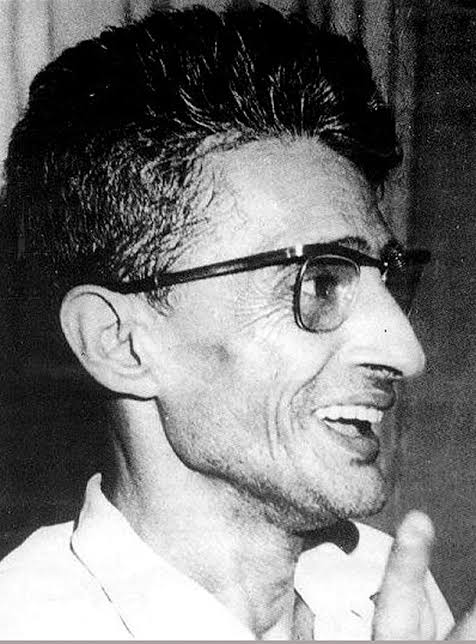
In this context, it is useful to remember how comrade Charu Mazumdar, the first general secretary of CPI-ML, explained this question in the 70s. A few months before he was martyred on 28th July, 1972, he shared his insights on dealing with wrong ideas/negative aspects within the people. Today, when the task of strengthening subjective forces is of prime importance, we must repeatedly go back to these ideas. The relevant article has been reproduced below.
On Struggle-Criticism-Transformation
Each man has two aspects-Positive and Negative. So does everything. We call that individual a good person whose positive aspect is more. Quite naturally, on the other hand, one whose negative aspect is greater we call him evil.
We should always examine these two aspects. This is the dialectical law. We must always keep an eye on the positive aspects.
We have to develop it. As they say, every nation has a positive side as well as a negative side. Which one shall we take? The positive one of course. We shall take it, learn from it and try to improve it. This is called transformation, the phenomenon of which we often speak about. If the case is 60-40 (%), we should then concentrate on the 60%. We must try to develop the positive aspect of each and every person through individual care. This is the main aim of, what we say, forming the party on the basis of individual contact. We have to understand one’s living ideas, his positive and negative aspects. And then we have to transform them. They have issued the slogan ‘struggle-criticism-transformation’ precisely for this purpose. As we launch struggles [against ideas], we also criticise, and, at the same time, transform. This transformation is possible.