

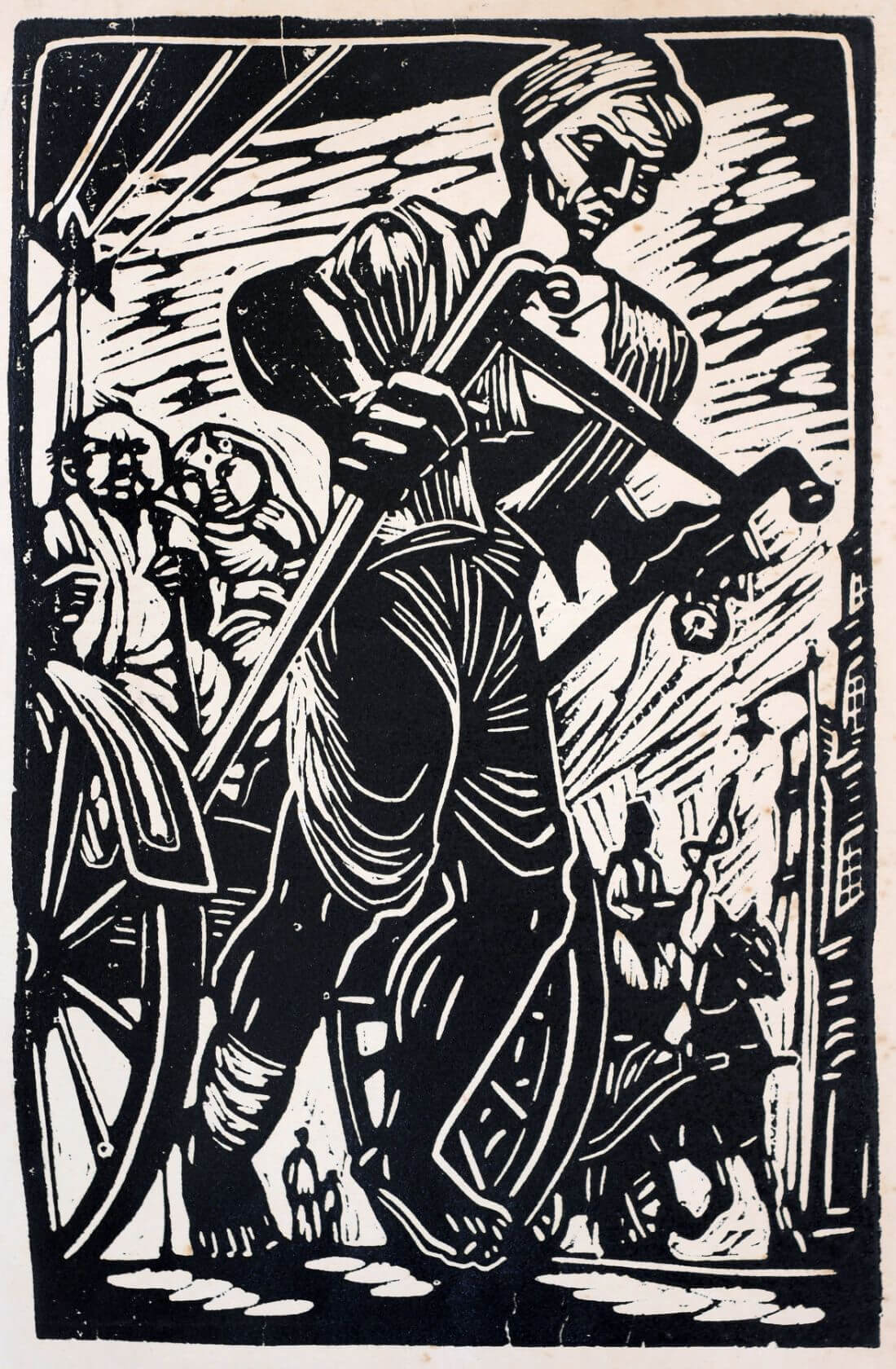
We often hear from those who have spent some time abroad, complaining about how ‘expensive’ life is over there. They talk about having to cook their own food because domestic help costs too much, or how a service that takes ten minutes in India can cost them several times more abroad. But what they fail to see is that while some celebrate this as the ‘Indian advantage’, for millions of workers, this is their labour being systematically undervalued so that someone else can live more comfortably. India is more ‘affordable’ because our economy has been built around the exploitation of cheap labour.
On 22 May 2026, the Karnataka government hiked minimum wages for 81 scheduled employments, fixing them at around ₹23,000 per month for unskilled workers and ₹33,000 for skilled workers. The notification was immediately met with strong opposition from the Karnataka Employers’ Association (KEA), which challenged the notification before the High Court. The KEA whined that an increase in wages of this scale is ‘unaffordable’ for businesses. Its broader argument is that higher wages will increase production costs, make Karnataka less competitive with neighbouring states, and ultimately threaten investment and employment. Following this, on the 26th of June, the principal director of the Karnataka State Audit and Accounts Department issued a circular stating that the minimum wages stand ‘suspended’ on the verbal instructions of the Finance Department.
The Minimum Wages Act of 1948 mandates that minimum wages must be reviewed and revised at intervals not exceeding five years. Trade unions have pointed out that Karnataka’s previous comprehensive revision dates back to 2016–17 and that workers’ real wages have consequently deteriorated, which means a reduction in buying power despite having a high nominal wage. If minimum wage increases fail to keep pace with rising prices, the policy becomes a mere symbolic ritual.
When businesses are faced with additional costs in production, they simply shift this burden onto the backs of the labourers by underpaying them. Being forced to work in such a place while in a constant battle against increasing inflation has been normalised with the use of terms like ‘cost optimization’ that only benefit the businesses. Workers have to wait and depend on notifications and their implementation for an increase in wages to make ends meet, while the price of food, rent, transport, and electricity does not wait for a government notification to shoot up. Why is it that when the profits of industry are threatened, the language of economic crisis is of grave concern, but when workers struggle to survive on stagnant wages and demand for more, they are treated as unreasonable?
This attempt to convert Karnataka into a vast reserve of cheap labour should not be seen in isolation. In parallel, thousands of acres of fertile agricultural land are being looted and plundered across the state. As witnessed earlier in Devanahalli, Anekal, and Bidadi, the latest addition is Hesaraghatta, where land is being acquired to build a ‘Quantum City’ and transform the area into the next real estate hotspot. These are not development projects; rather they destroy self-sufficient rural economies, dispossess farming communities, and drive thousands into poverty and unemployment.
The Congress has carried all these anti-people projects forward even after riding high on promises of pro-people governance. Given the specific characteristics of Indian society, capitalist and Brahminical Hindutva forces feed off each other. The case of D.K. Shivakumar illustrates this clearly. Unlike many of his peers in the Congress who wear a progressive mask, he is quite honest about himself. He proudly describes himself as a businessman and boasts of the ₹1,413 crore wealth he has amassed. He has openly acknowledged attending RSS shakhas as a student, recited the RSS anthem in the Karnataka Assembly, and celebrated the inauguration of the Ram Mandir in Ayodhya. Now, under the ongoing and undemocratic Operation Mukta, in which hundreds of Muslim civilians are being targeted as ‘Bangladeshi outsiders’, one must ask: Is the government truly run by DKS or RSS?
The struggle for minimum wages, therefore, is not merely a struggle over a number in a government notification. It is a struggle against a system where no matter who comes to power, it will ensure that the working class remains fragmented, competing for survival. The only way forward would be for workers to recognise themselves as a class capable of demanding their ownership over the wealth they create. They must organise to challenge the system that exploits their labour to hoard wealth and holds the power over its distribution.