
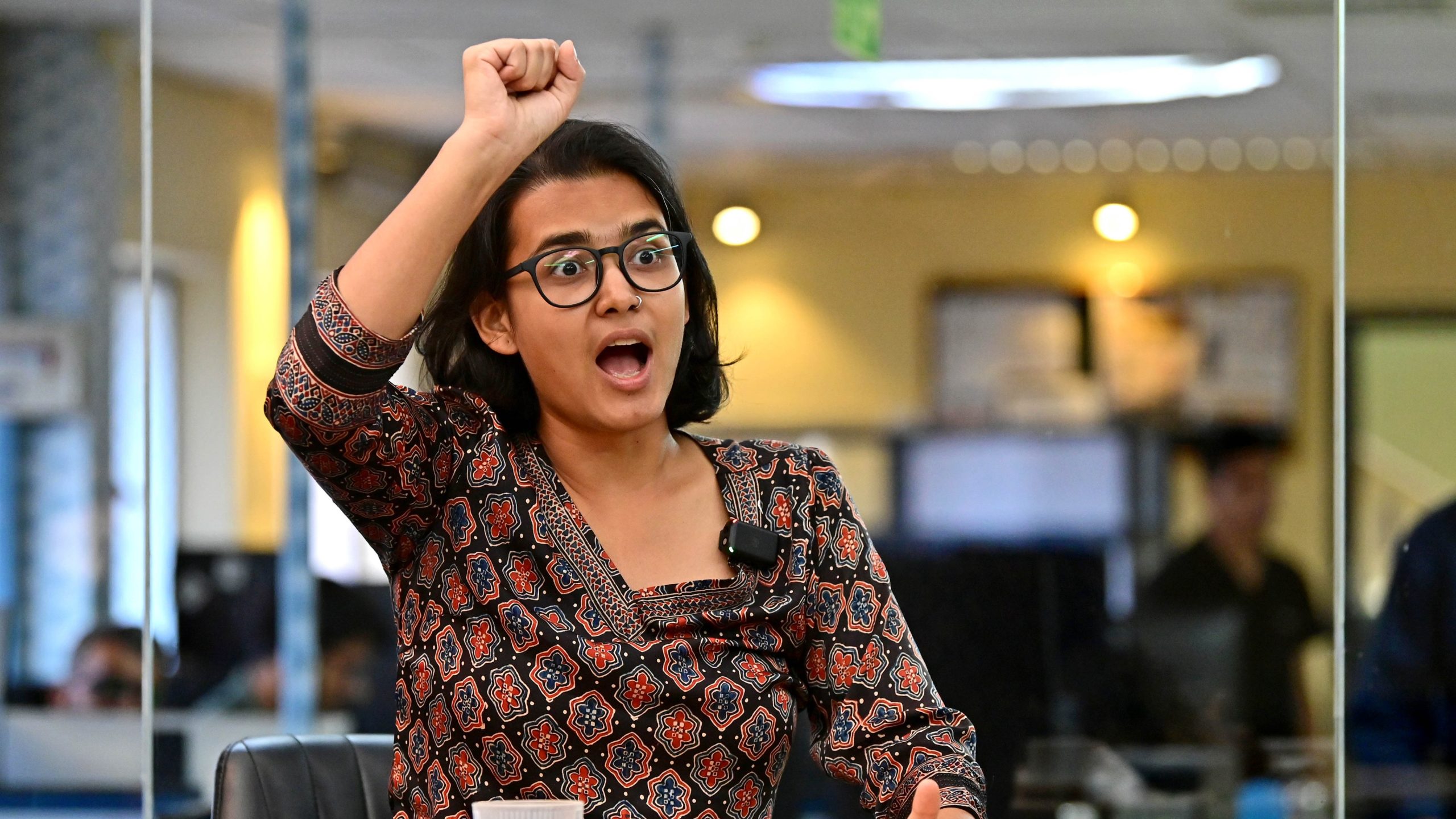
As part of the national Gen-Z rising campaign, AISA and RYA organised a public seminar on ‘Gen-Z on the March: Paper Leak, Accountability and the New Wave of Youth Politics in India’ in Bengaluru on 23rd August. The gathering brought together hundreds of students and youth with vocalist and writer T.M. Krishna, actor Kishore and AISA all-India president Comrade Neha.
Kishore’s speech focused on the politics of memory. He pointed to objections to using the names of Umar Khalid and Sharjeel Imam and chanting Azadi slogans during the student protests. He questioned why remembering those who fought the same system should threaten student unity. If unity requires forgetting people, communities and histories, we must rethink what kind of unity we build. Memory connects caste oppression, communal violence and student repression, instead of allowing them to become separate struggles and tools of division. A movement must carry its injustices, struggles, sacrifices and mistakes. To change history, it must carry its history.
T.M. Krishna challenged the idea that students should stay out of politics, arguing that “the moment we are born, it is political” and that politics shapes everyday acts. He called out the hypocrisy of treating casteism and religious fanaticism as non-political while branding student dissent political. He celebrated the creativity of the student protests, calling creative acts subversive and rebellious. On NEET, he stressed that the demand in Tamil Nadu is ‘Ban NEET’, not a fairer NEET, calling centralisation draconian and discriminatory for disadvantaged rural and caste-oppressed students. He placed NEET within a wider erosion of accountability and argued that democracy must be lived, not confined to the Constitution or textbooks.
Comrade Neha Bora began her speech by extending solidarity to students who faced police brutality during the 20th July Jantar Mantar protest and to the Bengaluru protester booked by the police. She then spoke about the suspension of a student by the Azim Premji University over a case of vandalism by the ABVP. In Jharkhand, thousands protested paper leaks and irregularities in the JPSC and JSSC-CGL examinations through indefinite sit-ins and hunger strikes, eventually securing a resounding victory. At ISI Kolkata, students protested the ISI Bill threatening institutional autonomy. At the University of Hyderabad, students were on hunger strike against growing ABVP atrocities, campus violence, inadequate infrastructure and the breakdown of scholarships. At NALSAR, students rejected the CJI addressing their convocation after he dismissed video evidence of police brutality against protesters. When the BCI chairman threatened that the graduating batch would not be enrolled as advocates, students protested and forced the notification to be withdrawn within a day and a half, followed by an apology. In Vijayawada, students exposed a teacher-recruitment scam.
In the Tamil Nadu context, Neha spoke of Anitha and the continuing struggle against NEET and centralisation. Anitha had fought the centralised examination system and, after disappointment from the judicial and political system, took her own life. In Kozhikode, Anagha Sasi has been protesting caste discrimination at Malayalam University, including caste abuse, discrimination and violence by students and administration. Neha also extended solidarity to struggles against the forced closure of government schools in Karnataka, warning that for families dependent on public education, losing a school can mean losing access to education, employment and a better life.
Comrade Neha shared that the rage at Jantar Mantar was much older than 20th July. It carried Rohith Vemula’s mother demanding justice, the repression at Jamia Millia Islamia and JNU, the women of Shaheen Bagh defending their citizenship, migrant workers forced to walk hundreds of kilometres during lockdown and the anger of people made to stand in queues during demonetisation. This rage, she insisted, is not violence. It is the refusal to accept humiliation and repression as normal. The political task she placed before the gathering is bigger than defeating one government at the ballot box. The struggle must confront the RSS-BJP’s ideological influence in our homes, campuses, workplaces, WhatsApp groups, and everyday social interactions. The question is whether young people remain isolated within an unequal system or organise as a political force capable of challenging it. Across campuses, students are already showing what collective action can achieve. If the classroom is unjust, students must organise. If education is being denied, organise. If unemployment threatens your future, organise. If dissent is being crushed, organise. Carry the struggles and memories that brought us here, turn anger into collective power and keep the spirit of Jantar Mantar alive.
Educate. Organise. Agitate.