
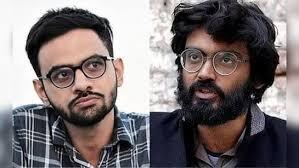
On January 5, 2026, a Supreme Court bench comprising Justice Aravind Kumar and Justice N.V. Anjaria denied bail to Umar Khalid and Sharjeel Imam, while granting bail subject to many conditions to Gulfisha Fatima, Shifa ur rehman, Meeran Haider, Mohd. Saleem Khan, and Shadab Ahmad. While the decision brings relief to those released, it cannot undo the injustice of their prolonged incarceration. Liberty was restored only after a significant portion of their life was lost to the grind of judicial process, effectively punishing them with more than half a decade of imprisonment while they were still presumed innocent. In its ruling, the court reiterated that a delay in trial alone cannot serve as a sufficient ground for bail. However, this approach shields the prosecution from accountability for stalling such trial proceedings.
Disparity of the court in treating Umar Khalid and Sharjeel Imam was rooted in the court’s application of the rigid prima facie test under Section 43D(5) of the UAPA. The Court held that the prosecution material, prima facie, attributes a central and formative role to Umar Khalid and Sharjeel Imam in the alleged conspiracy, while others were mere facilitators. Further restricting their legal options, the Court ruled that Umar Khalid and Sharjeel Imam may apply for fresh bail only after one year or once protected witnesses are examined, whichever occurs first.
The prosecution (State) controls the pace of the trial, including witness examination and the production of evidence. Consequently, the delays inherent in this arrangement force the accused to remain in prison, making their eventual release uncertain and dependent on the state’s procedural conduct. Given that both have already been incarcerated for over five years without conviction, this additional waiting period highlights the nature of liberty under the UAPA where bail has lost its role as a right and becomes a conditional relief.
On January 18, 2026, former Chief Justice D.Y. Chandrachud while speaking at the Jaipur literature festival addressed the denial of bail to Umar Khalid, asserting that bail should be a matter of right, grounded in the presumption of innocence. Nevertheless, these reflections stand in sharp contradiction to the reality of his tenure; under his watch, Umar Khalid’s bail plea languished through roughly 14 adjournments. Despite possessing the absolute authority to prioritise such sensitive cases, he presided over a system where judicial evasion allowed the process itself to become the punishment. Consequently, his post-retirement concern for the lost years of undertrials reads less like wisdom and more like a hollow attempt to sanitise a legacy defined by the very delays he now criticises.