
The Bhima Koregaon case represents a collision between civil liberties and state power, where an investigation into caste violence morphed into a complex narrative of conspiracy, digital espionage, and the indefinite incarceration of India’s leading intellectuals and activists. On January 1st, 2018, during the 200th-anniversary commemoration of the Battle of Bhima Koregaon, a historic victory of Mahad soldiers against the Peshwa army, a symbol of Dalit assertion, was marred by violent attacks from mobs, resulting in one death. Initial police FIRs named Hindutva leaders Milind Ekbote and Sambhaji Bhide as the instigators of the riots.
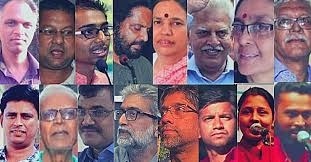
Later, the authorities shifted focus to the Elgar Parishad, a peaceful conclave held a day prior. The investigation alleged that the event was organised by the banned CPI (Maoist) and arrested 16 activists alleging them to be part of a sinister plot to overthrow the government and assassinate the Prime Minister. The prosecution relies on letters found on the computers of the accused. However, forensic analysis by the US-based firm Arsenal Consulting revealed that the evidence was planted using NetWire, a commercial malware, for 22 months prior to their arrests. The digital timestamps showed files were created using versions of software (Word 2010) that was not even installed in the computer of one of the accused.
The Bhima Koregaon case is a grim testament to how anti-terror laws are being repurposed to silence ideological opposition, turning the justice system into a tool of political vendetta. The state’s primary tool for indefinite incarceration has been the Unlawful Activities Prevention Act (UAPA), specifically section 43D(5) which makes jail the rule and bail the exception. The human cost of this legal gridlock is most tragically exemplified by Fr. Stan Swamy who was denied medical bail despite him suffering from advanced Parkinson’s diseases which eventually led to his death in judicial custody on July 5th, 2021.
Recently Jyoti Jagtap was granted interim bail on November 19th by the Supreme Court of India and also Prof. Hany Babu was granted regular bail by the High Court of Bombay on December 4th. As of now 4 out of the 16 accused are still behind the bars. Taking into consideration that the charge sheet filed was 20000 pages and had 363 witnesses the Bombay high court has admitted that the chances of completing the trial in the near future are bleak.