

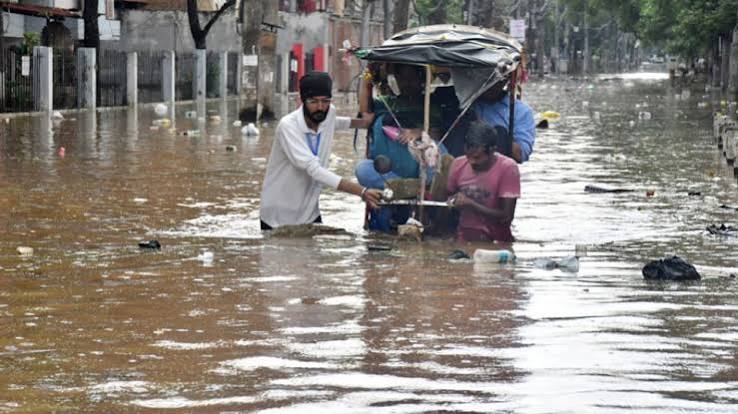
As floodwaters swallowed homes and highways across Assam in July 2026, Chief Minister Himanta Sarma pointed to a cloudburst in neighbouring Nagaland as a key trigger for the disaster. While extreme weather may indeed have intensified the flooding, the explanation left an uncomfortable question hanging in the air: can a single cloudburst explain a crisis that returns with unsettling regularity every monsoon? For the millions displaced by the overflowing Brahmaputra, the debate was never just about where the rain fell; it is always about why a predictable disaster continues to produce predictable devastation.
It is easy to attribute Assam’s annual floods to heavy rainfall and its geographical location along the Brahmaputra. But doing so overlooks how climate change, itself a product of ecocide, disproportionately affects the poor and marginalised, a huge majority of it depending on agriculture. Assam has always been on the receiving end of floods from time immemorial. This has also benefitted the people in the region because the Brahmaputra would carry fertile silt with its water, which would rejuvenate the farmlands of South, Southeast, and East Asia. People were accustomed to the floods; they constructed houses at elevations that would let the water pass and deposit the silt along its way. The picture gets blurry when we see how human-made interventions have intensified flooding. Rising temperatures have made Himalayan precipitation more intense and unpredictable, while ill-planned dams and embankments have worsened their impact. Dam walls trap silt, preventing it from replenishing downstream land; instead, floodwaters scour riverbanks, increasing erosion, while rushing water strips sand from riverbeds and deposits it on farmland, reducing soil fertility. Embankments, often weakened by poor planning, corruption, and substandard construction, can be damaged or washed away during major floods. While they cannot prevent inundation, they can obstruct water from flowing back into rivers, leaving the land waterlogged for much longer. Despite years of flood control efforts, the BJP led state government continues approving dam and embankment projects that have become a playground for corruption. While dams are justified as flood-control measures, authorities increasingly release large volumes of water during the monsoon to prevent them from being overwhelmed, creating sudden and often more destructive flood surges downstream than natural flooding.
For those stranded by the floods, survival has become a matter of chance and, it seems, so has relief. Several residents in flood-affected areas alleged that food packets dropped from helicopters often landed not in their hands, but in the floodwaters themselves. “The river is eating better than we are,” one resident remarked. While officials continue to highlight relief operations in press briefings, many on the ground say the reality looks very different. Announcing aid is one thing; ensuring it reaches the people it is meant for is another. In a disaster that returns almost every year, the irony is difficult to ignore: the government appears remarkably efficient at dropping promises from above, but far less effective at delivering them safely to those below.