
Revolution is not peaceful. The oppressors will not hand over their resources to the oppressed. We have to fight for it. Bring an end to the system itself, that thrives on the exploitation of the masses. This was the vision that the Dalit Panthers carried. May 29th marks the 54th anniversary of the formation of the Dalit Panthers Party. The emergence of this radical group was the result of millennia of atrocities and exploitation of Dalits, and of the status quo that continued after August, 1947. This was also a reaction to the opportunist Dalit parties and Left parties, who reduced the politics of revolutionary communities like the Dalits to mere competition for individual power. The Republican Party, supposedly created to make the legacy of Babasaheb Ambedkar’s vision reach the broad masses, reduced their politics to legalism, and were co-opted by the Congress. Mainstream left parties failed to incorporate a programme to annihilate caste into their already revisionist politics.
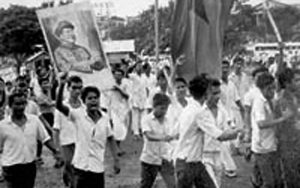
It was in the background of the preparations for the 25th year of Independence, in 1972, that the Dalit Panthers were formed. JV Pawar and Namdeo Dhasal, founders of the party, immediately called for a boycott of the 25th Independence Day, calling it a “Black Independence Day”. The rally called by them was joined by around 2 lakh people, mostly the youth of Bombay. Raja Dhale, another prominent leader of the Dalit Panthers, published an article on this Black Independence Day in Sadhna Magazine, to which Shiv Sena, a Hindutva outfit, and Congress threatened to burn the press down. The Panthers responded by threatening to fight back fiercely. When the goons arrived at the press, they were frightened by the strength of the Panthers, and retreated.
On 5th January, 1974, at a massive rally in support of textile workers in Bombay, the Panthers called for a boycott of the coming Lok Sabha elections. Shiv Sena attacked the rally. In a counter-protest, the Panthers were met with goons and police firing, in which Bhagwat Jadhav was killed; the first martyr of the Dalit Panthers. The fighting continued for two months.
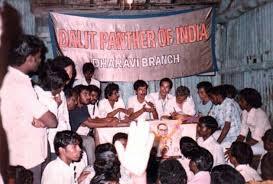
They used tactics of self-defense against atrocities on Dalits, especially in rural areas, held massive militant demonstrations calling for boycott of elections, propagated the need for revolutionary violence, and exposed the lies of the parliamentary parties. They gheraoed political leaders who deceived the people. The influence of the Panthers spread to Bombay, Poona, Nashik, Aurangabad, with thousands of Dalit youths joining the movement so rapidly that around five units were being inaugurated per day.
A powerful impact made by the Panthers was through the literature they produced. Their rebel literature, breaking away from the standard inaccessible forms of writing, took on an anti-establishment, confrontational, and defiant tone that made the mainstream literary heads very uncomfortable. This literature came up on boards, in slums, small magazines and posters, breaking the Brahmanical-liberal hegemony over literature. The Little Magazine Movement, ongoing in various parts of the country, fueled the powerful texts that the Panthers published.
The Panthers could not find any scope of emancipation in the existing parliamentary ‘democratic’ system. Inspired by the Black Panthers in the USA and the Naxalbari movement in India, the leaders of the movement saw the need for a rebellion against the social order that was designed to exploit Dalits, Muslims, Adivasis, women, and all oppressed peoples. This vision combined with Ambedkar’s ideals of social equality, became the guide for these revolutionary youth. They redefined Dalits as all those oppressed: scheduled castes and tribes, Neo-Buddhists, the working class, landless and poor peasants, women, and all religious minorities being oppressed by the Indian state.
The Dalit Panthers emerged as a revolutionary alternative to the vast masses of oppressed youth who were disillusioned with the system at hand. Despite the immense popularity they gained, the leadership was fragmented from the beginning. One section upheld a mixture of Marxism and Ambedkarite ideology, while the other wanted to embrace the path of Buddhism. This fundamental ideological split combined with clashing personalities resulted in the Dalit Panthers being officially split in 1976 into three factions. There was also a chunk of the leadership that was corrupt and misused the influence of the party over the sections of rural Dalits using their positions for extortion and land grab. Similarly now, there is a trend amongst youth to appropriate the title of Panthers to anyone associated with the anti-caste movement. That title is not trivial; it carries a revolutionary legacy, a legacy of sacrifice and militant armed resistance.
In the years after the transfer of power from British colonisers to the Indian ruling class, revolts and uprisings broke out across India. Peasants, workers, Dalits, and various struggles by the people from North to South, East to West were ongoing. None of the movements were mere emotional outbursts; rather they were expressions of pent-up anger against the system that ran on a hundred forgotten promises.
The Panthers saw right through the false promises of these opportunist parties. A system run by the same old feudal classes, empowered by imperialism, would continue to keep the Dalits deprived of power, wealth, and status, as they did for thousands of years. The freedom from the Britishers and setting up of a parliament failed to solve the issues faced by the Dalits. The governments only passed laws against untouchability, but did nothing to eradicate the caste system that promotes it. For that to happen, land must be redistributed, oppressive traditions must be done away with, people must become makers of their own life, rather than millennia old scriptures dictating who rules and who serves.
The Panthers were active only for a span of four years, but the spark created by them ignited a flame that has refused to die down!