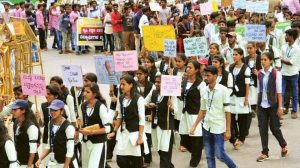

Recently, thousands of youth gathered at Jantar Mantar in Delhi to protest the crisis in competitive examinations. The movement emerged after the Chief Justice of India made a disparaging reference to unemployed youth and protesters, which students turned into the slogan “What if all the cockroaches come together?” The slogan turned into the Cockroach Janta Party and brought hundreds of youth, many of them first-time protesters, into political action. It came from a generation facing unemployment, delayed recruitment and centralised examinations.
Soon after Dharmendra Pradhan’s resignation, students and job aspirants in Jharkhand began a protest in Ranchi. Their immediate demands were: action over irregularities in JPSC and JSSC examinations, cancellation of examinations that protesters considered compromised, greater transparency in recruitment, and a CBI investigation. The controversy around the 14th JPSC Preliminary Examination had raised questions about the examination process, while allegations of irregularities in other recruitment examinations had already produced deep distrust among aspirants. The JSSC-CGL examination had itself been cancelled and re-conducted after a leak in 2024. The Ranchi protest therefore reflected years of frustration with delayed recruitment, cancelled examinations and anger over malpractice.
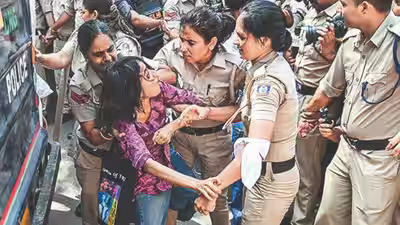
The Ranchi movement was made up largely of older job aspirants who had already spent years navigating the recruitment system. The sit-in at Jaipal Singh Munda Stadium continued for weeks, and student leader Devendra Nath Mahto went on an indefinite hunger strike. On August 10, when protesters marched towards the Jharkhand Assembly, the police used water cannons, batons, tear gas and lathis on the protesters, seriously injuring many of them. The students in both Delhi and Ranchi did not simply accept this repression as the end of the struggle. The Ranchi protesters continued after the police action. The Delhi protesters continued through arrests, restrictions and the difficulties surrounding the hunger strike. The outcomes were different and neither movement achieved everything it demanded, but both demonstrated that the state can be forced to respond when people refuse to back down.
There are, of course, problems and contradictions within these movements. The Delhi movement had serious limitations, particularly its dependence on digital mobilisation and moral pressure. These differences are worth understanding, but they should not lead to dismissal. This is where the Left needs to be careful. All forms of opposition to existing power have an objective place in the broader struggle against that power. This does not mean that every protest is revolutionary, or that every participant has the same class character or political understanding. A movement may be temporary, politically confused or largely expressed through social media, but still open a space that did not exist before.
The question today is not whether every young person protesting examination irregularities will become revolutionary. The question is whether there is a political force capable of meeting this anger without contempt, giving it direction and connecting it with the struggles of workers, peasants, Adivasis, Dalits, teachers and other oppressed sections. The role of a vanguard party cannot be to turn its back on a movement because it is imperfect. It must find points of unity and direct it towards bigger political goals.
Taking the case of Jharkhand: 9,000+ government schools are run by a single teacher, serving over four lakh children. Estimates of total teacher vacancies vary widely, from around 50,000 in primary and middle schools alone to nearly 1 lakh across the school system. At the intermediate level, some estimates put it as high as 55:1. Contract para-teachers form a large share of the primary teaching workforce and generally work with lower pay and no job security. Around 700 assistant professors appointed in 2008 are still waiting for their first promotion. A 2026 recruitment process for more than 2,400 assistant and associate professor posts across eight state universities has been delayed. Students at Kolhan University have lost an academic year because of examination delays. At Vinoba Bhave University, some examinations have been conducted more than a year late. The same JPSC that is facing scrutiny over alleged irregularities in its examinations is also responsible for recruiting university faculty, while that recruitment process has remained stalled for years.
Protests on education are also cropping up spontaneously across India. In Tamil Nadu, students continued the protest for the scrapping of NEET. In Kerala, a Dalit scholar Anagha Sasi from Malayalam University, has launched an indefinite protest against caste discrimination on campus. In Bihar, unemployed youth have taken to the streets over recruitment and examination irregularities. In Pune, Adivasi students have protested over education, hostel facilities and employment. In Rajasthan, UP, Bihar, MP, and other states, school students have protested demanding basic facilities. These protests demonstrate how a spark can turn into a prairie fire. In Karnataka, a cabinet sub-committee has been pre-emptively formed to discuss educational reforms.
The next step is to turn anger into solidarity, solidarity into organisation, and organisation into a broader political struggle connected with workers, peasants, Adivasis, Dalits and all oppressed sections. The students of Delhi and Ranchi have shown that the mighty state can be forced to bend. The task now is to ensure that the anger does not dissipate but becomes part of a sustained movement for an equal and just society.