
Language is not only an instrument of communication or even knowledge, but also an instrument of power.
– Pierre Bourdieu (Language and Symbolic Power)
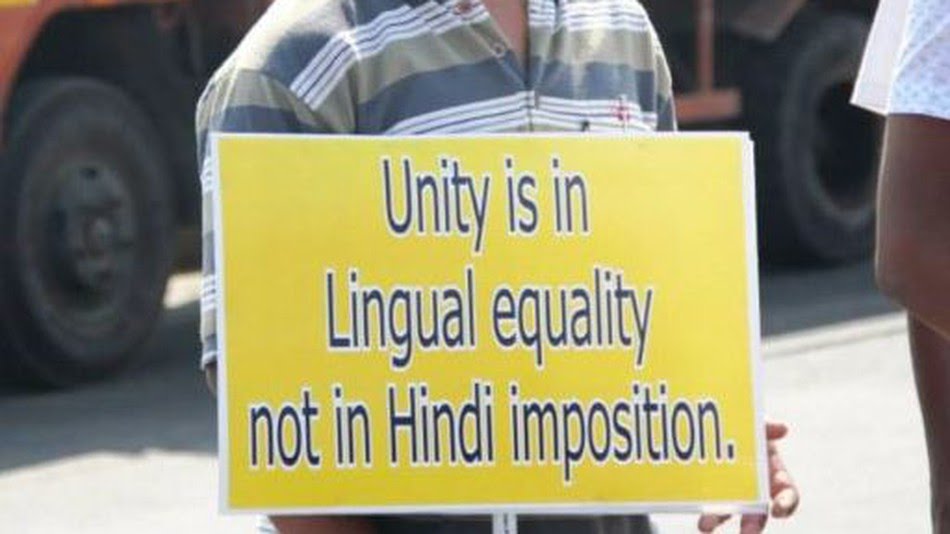
The CBSE has implemented the three-language framework for Classes 9 and 10 from July 1, 2026, under the National Education Policy 2020. Students have to study 3 languages, of which 2 must be Indian languages. While CBSE promotes the three-language policy as a progressive reform that fosters multilingualism, national unity, and cultural diversity, Tamil Nadu and other non-Hindi states view it as an indirect imposition of Hindi, a threat to federalism and their linguistic autonomy. This policy imposes unequal burdens on different classes of students. Wealthy students in elite private schools already possess advantages: English-speaking environments, private coaching, educated families, and access to resources. For them, learning an additional language is manageable. But for working-class and rural students studying in poorly funded schools, the compulsory addition of another language becomes an extra burden rather than an opportunity.
This inequality becomes sharper in non-Hindi states, where students must invest additional effort in learning a language that is not part of their daily life. In most cases, this third language becomes Hindi as it has state support. The policy claims to promote ‘national integration’, but in practice, it risks creating a hierarchy in which Hindi expands institutionally while regional languages become secondary. While imposing the burden of Hindi on non-Hindi students, this policy does not challenge the real language of class power in India – English. Access to elite jobs, higher education, science, technology, and corporate employment still depends overwhelmingly on English proficiency. This policy creates a double domination, while English remains the language of the ruling classes and global capital, Hindi expands as the language of cultural centralisation. Meanwhile, regional languages remain neglected. Smaller tribal and minority languages, which already lack institutional support, risk further marginalisation under a system dominated by Hindi, English, and major regional languages.
Instead of democratising education through massive public investment, better schools, and equal access to knowledge, the state introduces policies such as the NEP and the three-language policy, thereby reproducing existing inequalities through education. A democratic language policy should prioritise mother-tongue education, employment for people educated in their mother tongue, voluntary multilingualism rather than compulsion, and equal state support for all languages.