

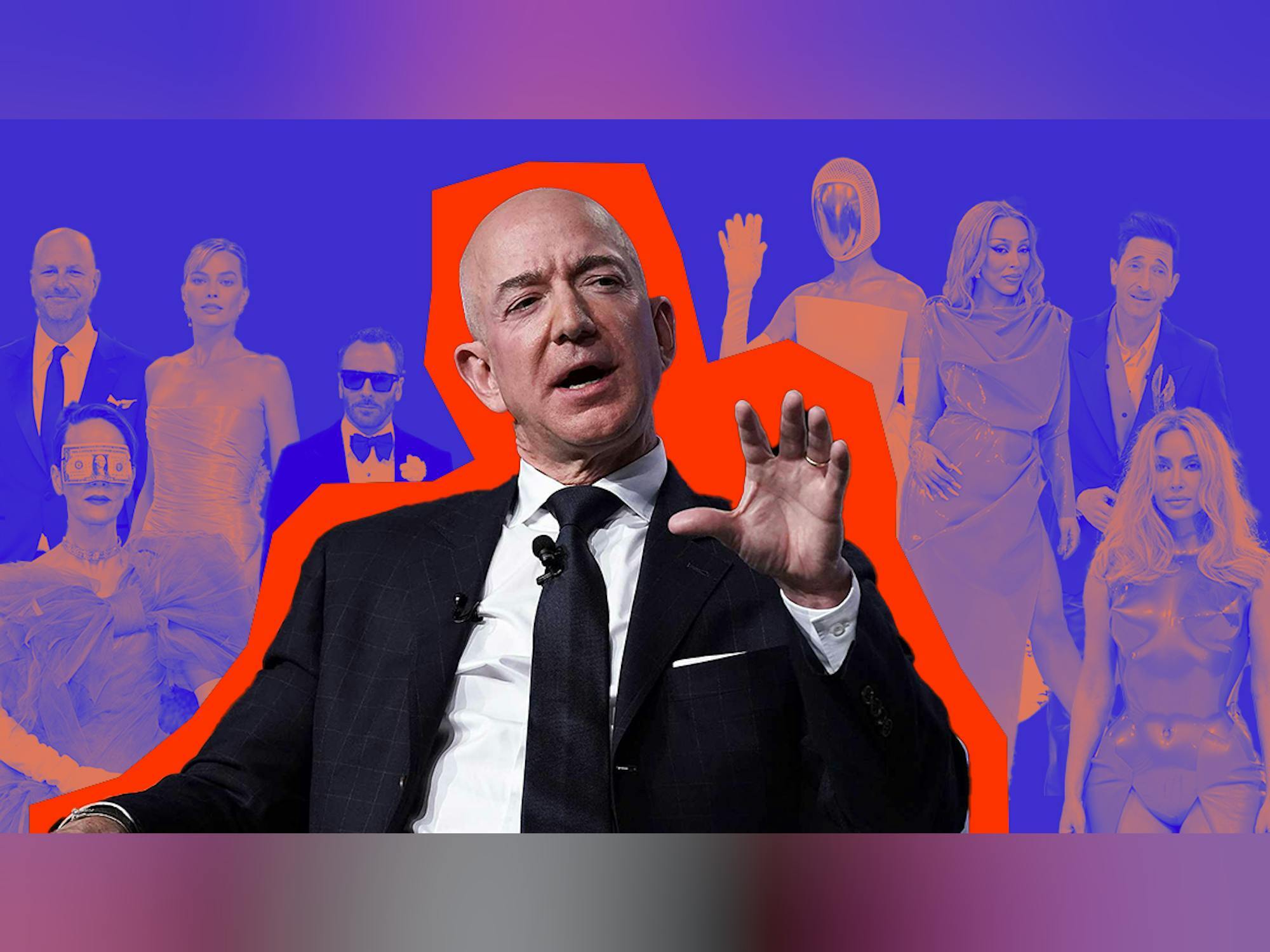
The Met Gala is often described as a celebration of fashion. In reality, it has evolved into something far more revealing: an annual spectacle for a vulgar display of wealth in front of a world that is defined by crisis. This year, the Met Gala was sponsored by Jeff Bezos, a figure widely criticised for worker rights violations, tax evasion and the influence of corporate wealth over democratic structures.
In the week leading up to the 2026 Met Gala, civilians were being killed across multiple regions: in Gaza, the death toll had exceeded 75,000 Palestinians and the ongoing US war on Iran under Operation Project Freedom contributed to further civilian deaths. At the same time, in the USA, the Bushwick hospital ICE incident involved a hospitalized man detained by immigration authorities while protesters were suppressed. This is the context in which billionaires and celebrities walked the red carpet.
The contradiction sharpens around Jeff Bezos. His sponsorship with the Gala triggered backlash as the Amazon Labor Union (ALU) protested outside over workplace injuries, union suppression and the refusal to recognise organised labour. The arrest of Chris Smalls (Co-founder of ALU), brought the contradiction into sharp focus. A worker resisting exploitation is detained, while the billionaire built on that exploitation is celebrated. At the same time, a protest message from 72-year-old Amazon worker Mary Hill was projected onto Bezos’ penthouse, exposing the wealth inequality. This dynamic reflects Thorstein Veblen’s idea of ‘conspicuous consumption’, where wealth is showcased to assert dominance.
From an Indian perspective, figures such as Isha Ambani are framed as national pride, but this is not representation. It is crony capitalism, repeated and aestheticized, where wealth accumulated through monopolistic dominance, resource extraction and corporate consolidation is repackaged as culture. Take the much-discussed mango ‘accessory’ by Subodh Gupta, an artist with accusations of sexual misconduct. It reflects a larger pattern where objects rooted in everyday life, labour and struggle are stripped of context and repackaged as luxury. What emerges is not art in any meaningful sense, but the sanitisation of exploitation, where the lived realities of working-class people are aestheticized and sold back to the elite as culture.
The Gala is a spectacle where the ruling class celebrates itself at the expense of labour. Its timing is revealing: crisis unfolds, yet celebration continues, exposing how insulated elite spaces are from material suffering. This is not culture, but structural violence dressed as aesthetics. Its irrelevance lies not in fashion, but in a form detached from the labour that produces it.