
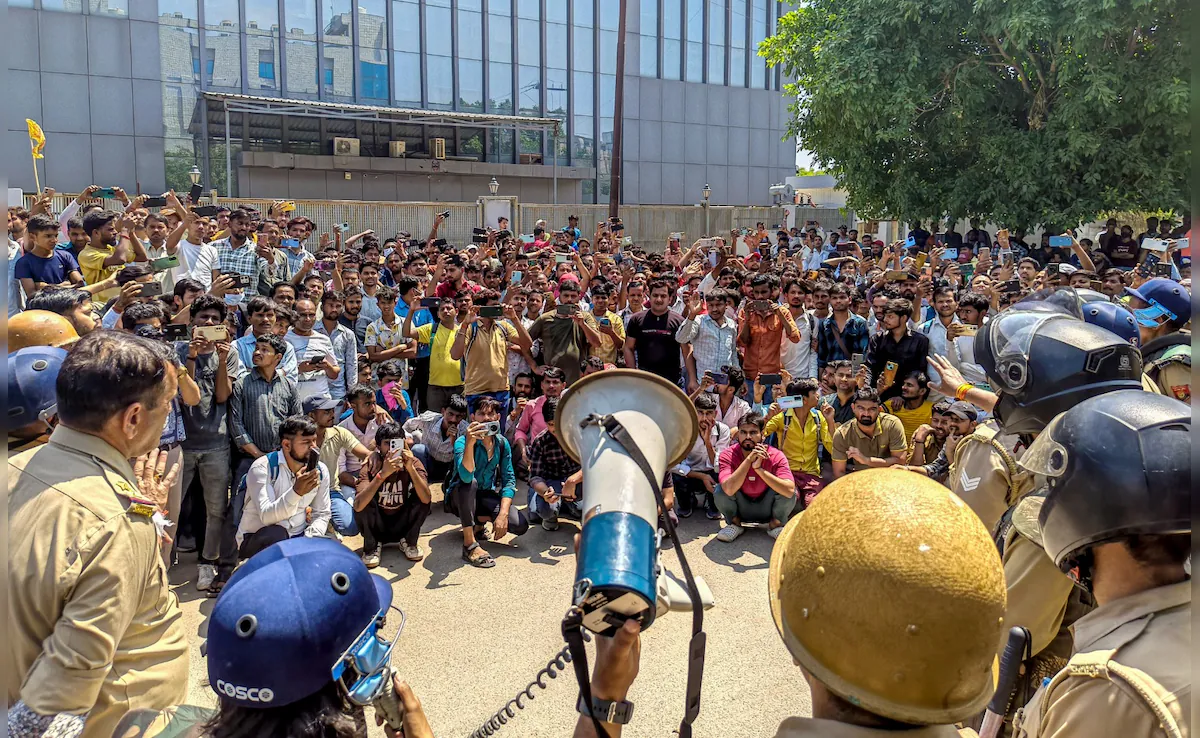
The protest by factory workers in NOIDA, which made headlines in the mainstream media only when it turned violent, is a struggle against inhumane working and living conditions, worsened by the recent inflation of prices. But the working classes only become visible when there is disruption of the smooth flow of production. NOIDA is not the only place where workers are agitating. From Barauni to Surat to Panipat to Faridabad to Manesar to Bhiwadi, workers from oil refineries, steel plants, automotive industries and garment factories, as well as domestic workers, have been raising similar demands, exposing similar patterns of exploitation, and receiving similar crackdowns and vilification from the government, proving the precarity of India’s industrial and informal workers’ situation. The response the NOIDA workers’ protest has garnered from the government, the media and the general public, proves the very need for such disruption, as there is no other way their voice is heard.
The workers have been explaining in interviews how they were already living on the edge of sustenance, and are now pushed beyond the limit. Their entire families have been living in small, congested rooms in dingy quarters with only two washrooms on a floor, and with health hazards posed by the lack of hygiene, the mosquitoes breeding in the drain, and the lack of ventilation in this excruciating heat. Even this namesake housing has now become unaffordable. The condition at the workplace is no better. Many workers are made to work 12-hour shifts, with wage deductions for lunch break and tea break. Wages worth 1 hour are deducted for a 45-minute lunch break, and another one hour worth of wages for being even a bit late from the break. The LPG crisis due to the Iran war has disproportionately affected the workers, with many returning to their hometowns, many others relying on cooking using firewood somewhere on their employer’s premises if allowed, while still others surviving on meals that do not require cooking, such as biscuits dipped in water. Many workers have had to take loans that amount to around Rs. 50,000, leaving them with no savings even after years of overtime work. Their children’s education has taken a massive hit, with some of them having to drop out of school, and some being sent back to their hometown. Thus, from meagre wages that have not been duly revised, to arbitrarily extended working hours without compensation, to rising expenses for necessities in the face of stagnant income, to absence of social security, to uncertainty of income and reduced pay due to contractualisation of labour, the impossible standards of living and working expose the parasitic nature of the system.
The workers have been asking the government for support in accessing gas cylinders, but to no avail. When they began the protest on April 9th, their demands fell on deaf ears until they resorted to destroying police vehicles and factories. Domestic workers also joined the protest, demanding higher wages, better housing, and healthcare and education for their children.
The crackdown and the smear campaign by the government combined with the promised reforms show its indifference towards the workers, and its desperate urge to restore ‘order’ and save face. Framing the protesters as ‘urban naxals’ is an old tactic straight out of the playbook of this fascist regime. While ‘naxals’ are equated with terrorists, as a pretext for atrocities against peasants and adivasis resisting loot of their jal-jangal-jameen, an extension of the label, is assigned to any semblance of dissent. The target can be students and civilians opposing draconian anti-minority laws or protesting against worsening air pollution, or workers demanding their rights. For these workers, protesting means risking their safety and livelihood. The police used tear gas on the protesters, arrested 350-400 workers, filed 7 FIRs, and detained around 1,000-2,000 workers, including those who did not even join the protest, booking them on charges like theft, rioting, mischief, and causing voluntary hurt.
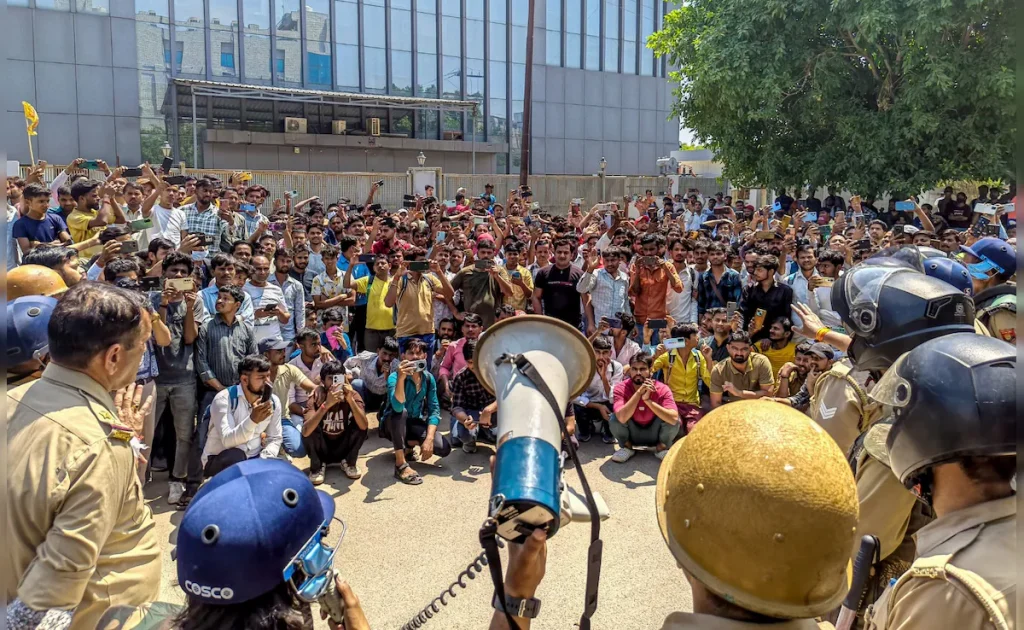
The police’s response and the ‘urban naxal’ narrative being propagated by the UP government shows how violence by the state is normalised while the workers are restricted to peaceful means that have proven nothing but futile. The ‘due process,’ rigged against the people by design, is invoked only when suppressing the working classes. This systemic disenfranchising of the workers is state violence. The process itself is a weapon meant to subdue any dissent. Hundreds of workers, including juveniles, and activists have already been arrested by the UP police without following due process.
The Labour Codes, effective from 1st April 2026, have opened the door for differences in minimum wages across states, while also making it more difficult for workers to unionise. The protesting workers in NOIDA are largely non-unionised. The Codes have also formalised contractualisation of labour, making it easy for employers to exploit workers. NOIDA workers have reported how hiring on an hourly basis are on the rise, how contractors try to bargain with them and even take some of their wages as commission, and how workers are excluded from formal records and are hired as ‘helpers,’ thus allowing employers to exploit them to no end.
The UP government raised the minimum wage by 21% in response to the militant protests, much below the demand of Rs. 20,000 a month and less than the national average. The promises being made to them now are like an insult to injury. There have been reports of how the workers are often paid in cash, without any formal record of the payment that they can access, and how they are merely told that the Provident Fund amount is being deducted from their wages without being shown any proof. While the state tries to vilify NOIDA workers, this pattern of workers protesting across the country in increasing numbers is proof of the failure of this imperialist system that extracts super-profit from cheap labour at the cost of their lives and dignity.