
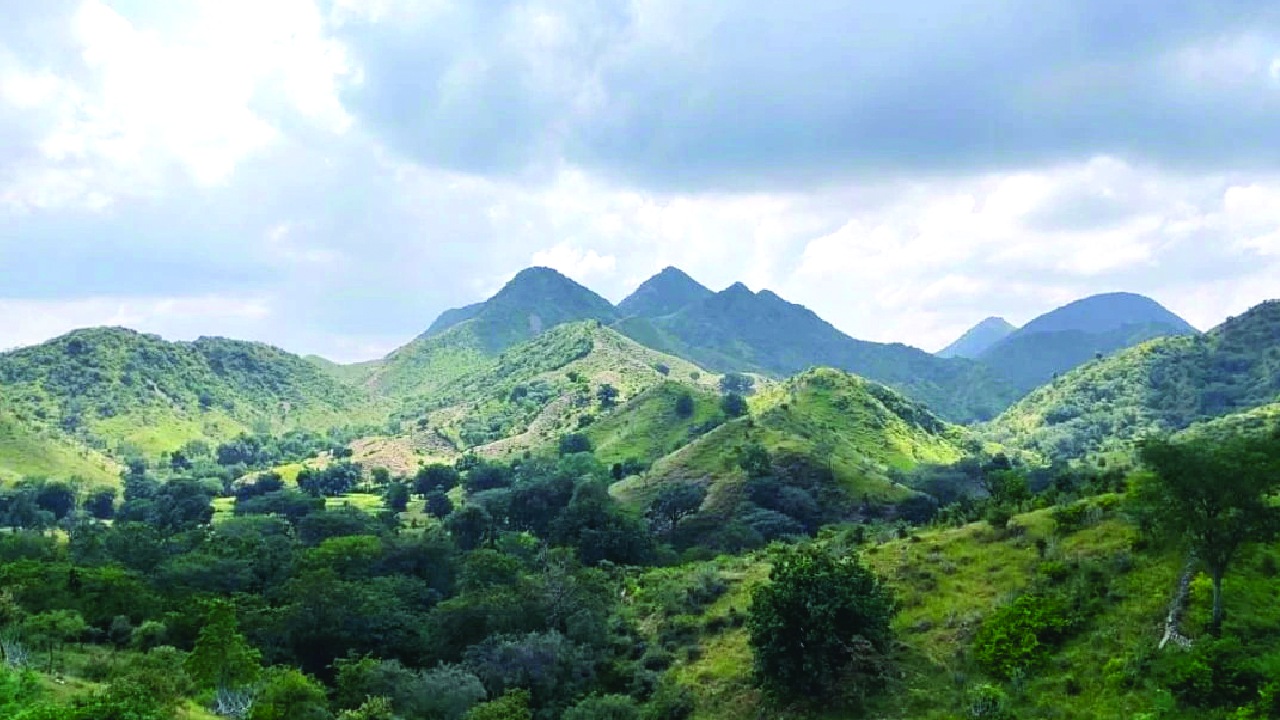
The Aravalli range is one of the oldest mountain ranges of the world, dating back nearly 2,000 million years. It spans over 700 km, stretching across Gujarat, Rajasthan, Haryana and Delhi. The present-day Aravallis are remnants of a much larger prehistoric mountain system, reduced over millions of years by weathering and erosion, sped up by mining activities over the past few decades. The Aravallis act as a natural barrier against Thar desert expansion into Delhi, Uttar Pradesh, Haryana and Madhya Pradesh. They also play a crucial role in replenishing groundwater and absorbing heat and dust.
In November 2025, the Supreme Court accepted a new definition of the Aravalli Hills proposed by a central government-led committee. According to this definition, Aravalli Hills were those landforms rising 100 m above the surrounding base area, and two or more such hills within 500 m of each other would qualify as an Aravalli range. This is dangerous in many aspects. Usually, the height of hills and mountains are calculated with the sea level as the baseline. However, in the new definition, the height is calculated from the surrounding base area. This definition opens up more than 90% of the hills to mining and construction activities. According to the Forest Survey of India, only 1,048 out of 12,081 hills are more than 100 m above the surrounding base area. Aravalli hills, with their natural cracks and fissures, have the potential to add 2 million litres of water per hectare in the ground every year. The groundwater aquifers under these hills hold large quantities of water and can release it slowly, contributing to the stability of groundwater level.
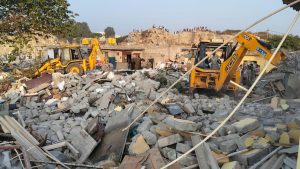
Post the LPG reforms of the Indian economy in the 1990s, the government policy framework on mining has seen a major shift. Mining operations, which used to be owned and controlled publicly by state enterprises were now handed over to private entities. Mining regulations were relaxed for the ease of business and profit-making, making India an attractive investment site. This allowed for increased mining leases in the Aravallis, a “protected” zone. Since then, mining and real estate business had been prevalent in the region illegally, with politicians, ex-SC judges and MPs owning pieces of land there. Now, after the redefining of Aravalli and the subsequent exclusion of over 90% of the hills from protection, mining is only going to increase and exacerbate the pollution and climate crisis.
The redefining of Aravallis sparked huge protests especially in northwestern India. Thousands of people were out on the streets resisting this move, calling out the government for prioritizing corporate interests and profits over ecological sustainability. To dissolve these protests and manipulate the public, the government put out a press-note declaring that no mining leases will be given in the Aravallis. This is nothing but a reiteration of the order given by the Supreme Court in November 2025, which directs the Ministry of Environment, Forest and Climate Change to prepare a Management Plan for Sustainable Mining (MPSM) for the Aravallis through the Indian Council for Forestry Research and Education (ICFRE). The aim of this is to identify “permissible areas for mining”, and it says that no mining leases should be granted until the MPSM is finalized. In the government’s statement however, they conveniently refused to comment on the people’s concerns of the new definition of the Aravallis and make changes to it.
Environment Minister Bhupendra Yadav went to the extent of saying that the new definition will bring more than 90% of the Aravalli region under “protected area”. The government also reached out to influencers who had posted content in favour of Aravalli hills, asking them to delete their content and market the new definition as a favourable move that would save the Aravallis and improve infrastructure and development. Many influencers denied and exposed the government online for paying influencers to shape public opinion in their favour. Godi media, on the other hand, said that the Aravallis, which absorb heat and dust and help reduce pollution, are responsible for Delhi pollution.
The Supreme Court has put a temporary stay on its judgement accepting the redefinition of the Aravallis. A high-powered panel of domain experts is responsible to review and assess the committee’s report in detail. Legalizing the corporate plunder of the Aravallis is going to have drastic impacts on the already worsening climate of India. Delhi NCR, Gujarat, Uttar Pradesh, and Haryana would turn into semi-deserts in a few decades without the Aravallis. Agriculture would be severely hampered due to groundwater depletion. The Aravallis hills are also home to diverse flora and fauna that play a crucial role in preserving ecological balance that will be doomed to oblivion.
At the heart of the Aravallis crisis lies the state-corporate nexus where both players benefit off each other. Large foreign and domestic corporations dictate policies and bend regulations to loot resources and maximize corporate profits, and in turn provide electoral funding. Under capitalism, the state’s role is to maintain the hegemony of the ruling classes so that they can continue to make large profits. It is the need of the hour to jointly resist the looting of our natural resources and expose the false “development” narrative that prioritizes profits over people, or the graves they dig will eventually swallow all of us.