

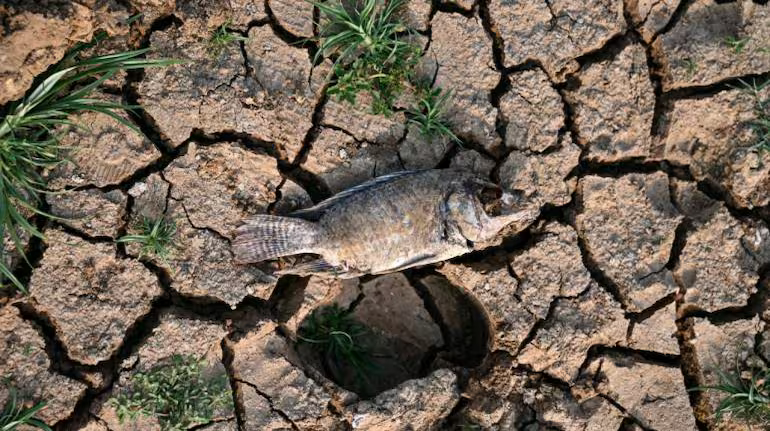
Along with the rising temperature, this summer, Bengaluru city is facing an acute water shortage. With the depletion of underground water and drought in the Cauvery basin, the city is staring at a Cape Town-like water crisis this year. The water crisis in the city has impacted industries, institutions, large apartments, gated communities, government and private schools, fire brigades, hotels, and restaurants. Techies are reported to be fleeing the city due to lack of water in the high-rises, residents are queuing up in RO plants and are getting more and more dependent on water tankers for their daily chores. Tankers charging exorbitant amounts have made the life of the city’s working poor more difficult. The crisis is higher in the areas of greater Bengaluru without access to piped Cauvery water, solely dependent upon tankers and groundwater through borewells. The erstwhile Bengaluru Mahanagara Palike (BMP) was massively expanded over 225 sq kms and was amalgamated with 7 City Municipal Councils, 1 Town Municipal Council, and 110 villages to form Bruhat Bengaluru Mahanagara Palike (BBMP) in 2007). Ironically about 1.5 year ago Bengaluru witnessed massive floods.
According to data compiled by WELL Labs, the city’s demand for freshwater stands at approximately 2,632 million liters per day (MLD). In addition to the 1,460 MLD of Cauvery water supplied by the BWSSB, the city presently utilizes an estimated 1,372 MLD of groundwater, which is almost half of its water requirements.
Dr. TV Ramachandra, a scientist from IISc, Bengaluru, who has been doing research on this problem for decades opines that this crisis is due to unplanned urbanization. In the last 4 decades there has been a 1055% increase in the concrete area, 88% of loss in vegetation and 79% loss of water bodies (majorly lakes). In the 1800s Bengaluru had 1452
interconnected water bodies which is only 190 today. Due to this destruction, the land has become non-porous and the percolation of the rain water does not happen correctly to recharge the groundwater level on which 45% of the city depends.
Figures show that just 8% of the rainwater goes for recharging the water table. Lakes and Rajakaluves are encroached to make way for construction and other so-called developmental activities destroying the water bodies and its interconnectivity in the city leading to drought in summer and subsequent flood during rain. This situation also leads to the landscape losing its ability to moderate the climate, increasing the temperature to an unprecedented 36 degrees in the last few weeks. Dr. TV Ramachandra clearly states that by the 1990s (indicating the beginning of neoliberal “reforms”) we have handed over the city to builder mafias and have carried out a spree of illogical and unplanned development which has led to this situation which is only going to worsen further.
Moreover, because of deforestation and changes in climate there is lower rainfall this year, leading to 175 taluks in the state being drought prone and depleting the river water in the Cauvery basin, the second important source of water for Bengaluru. Unrestricted destruction of the native vegetation in the Cauvery catchment is causing the river to lose its ability to retain water, adding up to the crisis. This is also contributing to the increasing conflict between states for the Cauvery water.
Experts have refuted the claims of the Karnataka Government that efforts like digging new borewells, seizing water tankers, banning car washing and banning the use of Cauvery water for construction will solve the issue. They say that these are all ad hoc short term measures in reaction to the situation just to show the people before elections that
something is being done. Study shows that the groundwater level which was 100-150 feet around a lake, after encroachment of the lake went down to 600 feet, and later, water was not available even for 1800 feet deep borewells. So, digging borewells is not a solution at all. While desilting of the lakes and filling the lakes with tertiary level treated wastewater by BWSSB can manage the situation in the short term, the only long term sustainable solution according to experts is to plan the city better.
Government initiative like the Mekedatu dam project have also been slammed by scientists like Dr. TV Ramachandra. He clearly says that this project will aggravate the situation rather than solving it and the government only has the agenda to loot our natural resources. This project will destroy 5500 hectares of forest which has a capacity to store 100 Thousand Million Cubic feet (TMC) naturally while the dam is claiming to store 65 TMC of water. Moreover, these forest ecosystems provide services to an extent of Rs. 7 to 8 lakhs per hectare per year (provisioning, regulating and cultural services). These ecosystems sequester carbon and minimize greenhouse gas (GHG) footprints. Siding away all these benefits that this vast forest naturally has, the government is planning for this grand project in the name of solving the Bengaluru water crisis and solving the Cauvery dispute. It is well established that mega dams, in the long run, have been detrimental for the common people and have only served the interest of the big corporations. For example, the benefits of the controversial Narmada dam have only been reaped by multinational companies like Coca-Cola, Ford Motors and Tata Motors and all the adverse effects of the ecological destruction have been dumped upon the people causing loss of life, shelter and livelihood.
Bengaluru’s water crisis should be seen as a part of a greater ecological crisis inflicted upon humanity by this neoliberal system. This system, the highest stage of capitalism, that came into being in India in full swing in the 90s under the diktats of US imperialism, handed over cities like Bengaluru to big corporates and builder mafias to intensify the loot of Jal Jangal Jameen in the country. The unplanned “growth” of the city that Dr. Ramachandra points to be the cause behind this crisis is a manifestation of the unplanned economy this system is based on. A system based on ruthless competition and super-exploitation can never be planned. Even if some honest politicians and bureaucrats try hard to mend it, they will face thousands of limitations and resistance. Even if the governments gain the ability to regulate this boundless “development”, the corporations behind the government will not allow it.
Marx and Engels have provided a holistic correct view on this issue in their writings. They have argued that in the context of production and consumption, the relationship between humanity and nature should be regulated by the producers in harmony to nature’s laws in a scientific manner, while fulfilling individual and collective needs. Such a rational application of science, however, is impossible under capitalism that is based on immediate, individual gain. Back in the 1870s, Engels argued in Anti-Dühring that the capitalist class was “a class under whose leadership society is racing to ruin like a locomotive whose jammed safety-valve the driver is too weak to open.” It was precisely capital’s inability to control “the productive forces, which have grown beyond its power,” including the destructive effects imposed on its natural and social “environs,” that was “driving the whole of bourgeois society towards ruin, or revolution.” Hence, “if the whole of modern society is not to perish,” Engels saw the deep need for the reconciliation of humanity with nature, which only a revolution in the mode of production can bring.
Let us not, however, flatter ourselves overmuch on account of our human victories over nature. For each such victory nature takes its revenge on us. Each victory, it is true, in the first place brings about the results we expected, but in the second and third places it has quite different, unforeseen effects which only too often cancel out the first. The people who, in Mesopotamia, Greece, Asia Minor, and elsewhere, destroyed the forests to obtain cultivable land, never dreamed that by removing along with the forests the collecting centres and reservoirs of moisture they were laying the basis for the present forlorn state of those countries. When the Italians of the Alps used up the pine forests on the southern slopes, so carefully cherished on the northern slopes, they had no inkling that by doing so they were cutting at the roots of the dairy industry in their region; they had still less inkling that they were thereby depriving their mountain springs of water for the greater part of the year, and making it possible for them to pour still more furious torrents on the plains during the rainy seasons… Thus at every step we are reminded that we by no means rule over nature like a conqueror over a foreign people, like someone standing outside nature—but that we, with flesh, blood and brain, belong to nature, and exist in its midst, and that all our mastery of it consists in the fact that we have the advantage over all other creatures of being able to learn its laws and apply them correctly.”
-Friedrich Engels, Dialectics of Nature


