
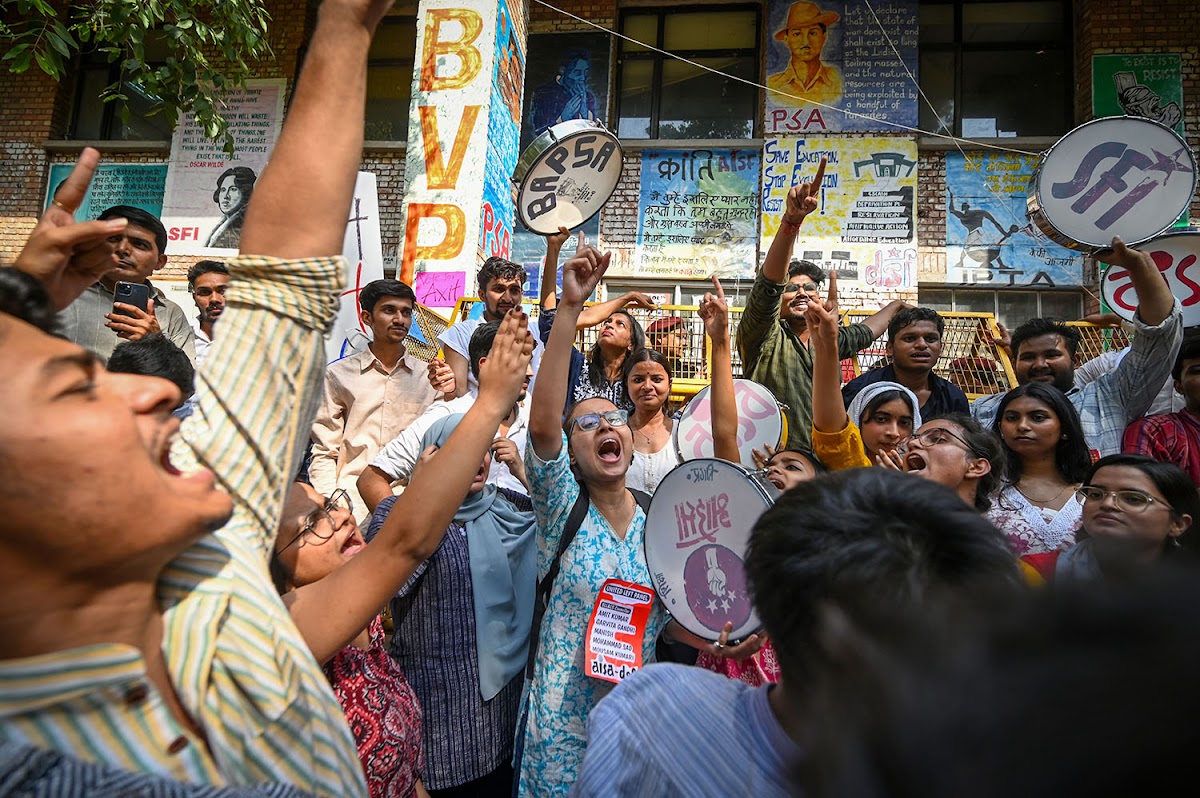
After 37 years of enforced silence, Karnataka’s college campuses may soon hear something unfamiliar: the noise of student elections. Chief Minister Siddaramaiah announced in the 2026–27 State Budget the plan to revive student union elections. The question worth asking, however, is not simply whether elections will return, but what kind of democracy will be allowed back in.
Student elections in Karnataka were banned in 1989 by the government of Veerendra Patil, citing campus violence and rising political interference. The ban, intended as a temporary corrective, quietly became a permanent feature of higher education policy, surviving government after government, party after party. Decades later, the formal structures through which students could collectively voice grievances, negotiate with administrations, or enter public life remained frozen.
In December 2025, the Karnataka Pradesh Congress Committee announced a nine-member panel to examine the feasibility of restoring elections. By March 2026, the Budget made it official. And by April, student wings of the Congress, BJP, JD(S), and Left parties had gathered at the State Higher Education Council auditorium, urging the government to act without delay.
The proposed framework draws from the J.M. Lyngdoh Committee guidelines, which the Supreme Court had endorsed as a template for fair and regulated campus elections. Ministers have signalled that rules will be framed expeditiously. But the details remain contested. Proposals to restrict candidacy to students with clean disciplinary records, good attendance, and no involvement in protests have already drawn resistance from NSUI and JD(S) representatives, and rightly so. A framework that disqualifies students for dissent would be nominal democracy.
The structural problem that the proposal cannot ignore is that the majority of Karnataka’s students today study in private institutions, where management authority is nearly absolute and student representation is a formality at best. Any revival that leaves private colleges untouched will, in effect, restore democracy to a small share of the student population.
Karnataka has produced leaders whose political formation began on campuses. But the more urgent point is that students need elections to have a meaningful say in the institutions that shape their present and future. Whether the government delivers on that principle or offers a diluted, manageable version of campus democracy remains to be seen.