
Iran has been under attack by the imperialist US-Israel axis, not merely since 28th February of this year, but for over seven decades. This hostility did not emerge from some timeless cultural clash but as part of capitalist expansion. In 1953, the United States orchestrated the overthrow of Iran’s democratically elected prime minister, Mohammad Mossadegh, after he dared to nationalize the country’s oil industry. That act of sovereignty threatened the profit margins of Western oil monopolies, and so Washington restored the autocratic rule of the Shah monarchy, ensuring that Iranian resources remained plundered and its labour exploited. This is the essence of imperialism, the use of military and political violence to subordinate entire nations to the accumulation needs of the big bourgeoisie.
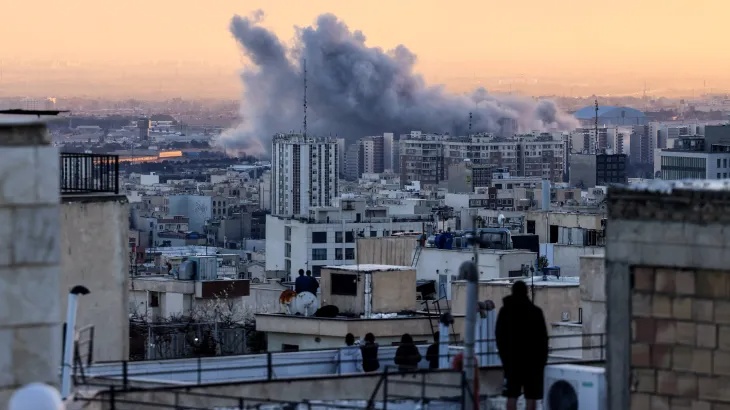
The present phase of aggression began on 28th February, when coordinated United States and Israeli air strikes targeted Iranian military installations, government infrastructure and civilian areas, marking a sharp escalation in the long history of intervention against Iran. In the days that followed, further strikes damaged schools, residential neighbourhoods, and public infrastructure, while Iran responded with missile and drone attacks on United States bases across West Asia. The conflict rapidly expanded beyond a limited confrontation into a regional military crisis involving multiple theatres and actors.
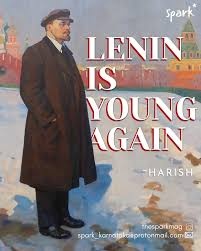
Imperialism, as comrade Lenin has taught us, is the highest stage of capitalism, a system in which international monopolies divide markets among themselves, and the world itself becomes territorially partitioned among the great powers. In such a system the domestic market can no longer absorb surplus capital, forcing the ruling class to seek foreign outlets for investment, raw materials, and captive markets. Every US military intervention of the past seventy years must be understood through this lens. The invasion of Grenada, the wars in Iraq and Afghanistan, the destabilization of Venezuela, the continuing blockade of Cuba, and now the aggression against Iran are not aberrations or mistakes, this is the last straw for a declining empire. When the United States faces an economic crisis at home, which it perpetually does because capitalism’s internal contradictions guarantee recurring cycles of going to have our very large United States oil companies… go in, spend Actions of dollars… and start making money.”
We must also question how the imperialist system enlists states to do its bidding. India, a proclaimed sovereign democracy, has shown repeatedly that it will suppress its own people in service of global capital. Protests emerged across India after Ali Khamenei was killed as a result of the air strikes carried out by the US and Israel. They were briefly tolerated and then crushed from Karnataka to Kashmir. In Kashmir mourners were met with lathi charges, tear gas, and the mass deployment of state and central forces. Cases were filed against protesters, including Aga Syed Ruhullah Mehdi, a sitting Member of Parliament. This repression cannot be understood in isolation from India’s changing position in the global imperialist order. Despite its formal claims to non-alignment, the Indian ruling class has steadily deepened military and strategic cooperation with the United States and Israel over the past four decades. Its silence on the bombing of Iranian cities and its crackdown on domestic protests reflect its attempt to consolidate its role as a regional power aligned with Western capital while maintaining access to Gulf energy corridors and defence partnerships. In this sense, the suppression of solidarity protests at home becomes part of India’s external alignment abroad.
The consequences of this alignment are not limited to the suppression of protests alone. The escalation of war in West Asia has already begun to affect ordinary people across India through disruptions in LPG supply chains and rising fuel insecurity. Small factories, workshops, transport operators, street vendors, and working-class households dependent on LPG for cooking and production have faced shortages and uncertainty. In this way, the costs of imperialist conflict are once again being transferred onto workers, small and medium businesses, and the poor.
At the time of this writing, more than 26,000 civilians have been injured and over 2,000 civilians have been killed in Iran, among them more than 170 schoolgirls killed in a US-Israeli attack on a primary school; in neighbouring Lebanon, Israeli strikes have killed at least 1,200 people and injured more than 3,300, while over a million civilians have been displaced as the conflict widened across the region. Not merely the pilots who dropped the bombs, nor the politicians who signed the orders, but the entire capitalist system that commodifies human existence and treats the bodies of children as acceptable collateral damage is to be held accountable. They depend on our passivity and on the fragmentation of our solidarity into nationalism, sectarianism, and resignation. We have become accustomed to this behaviour, accustomed to watching governments crush dissent, accustomed to seeing images of dead children in faraway countries. That normalisation is the real victory of imperialism, for it convinces the exploited that no alternative exists.
We must hold a contradiction in our minds simultaneously. The Iranian state has committed its own crimes most notoriously against women and against political dissenters. We do not excuse those crimes. But the US and Israel do not care about Iranian women; they weaponize human rights rhetoric as a cover for their true aim, which is to keep Iran weak, fragmented, and open to exploitation. They have no intention of delivering a democratic government that serves the Iranian people. Their goal, as always, is to install a comprador regime that will open the oil fields and market to the US. The defense of Iranian sovereignty against imperialist aggression is therefore not a defense of the Islamic Republic’s internal policies; it is a defense of the principle that nations should be free from imperialist clutches.
This war must also be understood in a wider global context. Countries such as Cuba and Venezuela have long faced sanctions, destabilization attempts, and regime-change operations from the same imperialist forces. Their governments have condemned the strikes and expressed solidarity with the Iranian people because they recognize a familiar pattern: whenever a country attempts to control its own resources and pursue an independent path of development, it becomes a target. Across West Asia too the conflict is widening, drawing in multiple actors and threatening to destabilize the entire region. The attack on Iran is therefore not an isolated event but part of a broader strategy of maintaining imperial dominance over the world.
When Iran retaliated against these attacks, it was immediately accused of starting a regional war. This accusation is as shallow as the promises America and Israel have made to the Iranian people. The United States has spent decades building military bases across West Asia in Jordan, Kuwait, Bahrain, Syria, Qatar, Saudi Arabia, Turkey, Iraq, and the United Arab Emirates. It has ringed Iran with forward operating bases, fighter squadrons, and naval fleets. By any analysis, Iran is acting in self-defense. This conflict is capitalism’s endless search for profitable outlets.
All students, workers, and democratic forces throughout the world must oppose imperialist war wherever it appears, resist attempts by our own governments to align with military aggression, defend the democratic right to protest against war, and build solidarity with people across the oppressed nations of Iran, Palestine, Cuba, Venezuela, who continue to resist domination. Only through international solidarity and organized resistance can an imperialist war be ended.