

Bangalore Medical College and Research Institute (BMCRI) was rocked by a two-day protest organised by students pursuing BSc in Allied Health Sciences (AHS) in early February. The protests highlighted a demand for stipends for those undergoing compulsory internship period in their 4th years. Upon closer investigation, it was found that the lack of stipends was just the tip of the iceberg, their overall academic experience was replete with other serious issues.
BMCRI is a prominent government medical college in Bengaluru, Karnataka, affiliated with Rajiv Gandhi University of Health Sciences (RGUHS). It offers MBBS as well as BSc courses in Nursing and Allied Health Sciences. The courses in the Allied Health Sciences stream include Radiology, Optometry, Medical Imaging Technology, Medical Lab Technology, etc. that have been running for more than a decade. As of now, about 450 students are studying in these courses spread across four years. A cursory look at the RGUHS website shows that BMCRI is not even mentioned as one of the institutes providing AHS courses. It only shows the address with a stated capacity of 40 seats, something that starkly contrasts with the ground reality.
Despite AHS graduates forming the backbone of medical services everywhere, they are kept at the periphery of the medical fraternity with no respect accorded to their discipline or labour. The college does not provide them either with a dedicated building or a set of faculty recruited for teaching AHS courses. Since the start of these courses, the students are forced to have their classes in empty seminar halls, auditoriums, or inside respective departments within Victoria hospital. Due to the lack of faculty members, the PG medical students are forced to take their classes. Often enough, due to timing clashes, the AHS students are forced to run behind and request the PG students to teach the lessons and finish the curricula. All this trouble despite paying Rs. 17,000-18,000 per year at a public institute.
Besides this everyday discrimination, the students are made to work for 8-12 hours on all days during their internship period. This is crucial work, not only confined to Victoria but also includes being posted to other hospitals like Kidwai, Sanjay Gandhi, etc. According to the RGUHS guidelines for internship as issued in 2019, the students are eligible for a stipend for the duration of their compulsory internship of 1 year. The guidelines issued also stipulated a limit of 470, 650 and 750 hours of clinical posting per academic year for first, second and third year students, respectively. However, the junior students are forced to work more than 1500 hours per academic year. They are also forced to do night shifts, work on national holidays, and Sundays. All this unpaid labour is expected to be borne silently.
Despite going through means like signature campaigns and petitions, their demands were never met. As a last resort, the students decided to boycott classes and gather in protest at the BMCRI college premises on the 4th of February. Shortly, the police were called in who invoked the Freedom park rule and threatened the students with FIRs unless they disperse. The principal and dean came out too, repeatedly threatening the students with cancellation of exams, internships, police escalations, etc. without even accepting the memorandum of demands prepared by the students. The principal even said that the staff do not get paid for teaching AHS courses. She taunted the students for paying ‘low fees’ while being ungrateful for the ‘free’ classes.
The protest continued on the 5th of February inside Victoria hospital with a lot of media coverage. Since then, the students have met the Health Minister and submitted a memorandum at RGUHS. Their internal exams were preponed to disrupt the protest. The recent graduates’ and interns’ certificates have been withheld by the principal who is demanding a written apology from all protestors. In the face of such arm-twisting, students have filed an RTI asking for details of the funds that have reportedly been released by the government for betterment of infrastructure. Interestingly the students initially approached ABVP for support, however they were denied any. It was only left student groups who stood with them in solidarity.
The BMCRI protest once again stresses the need for student unions in Karnataka. The college administration does not recognise legitimate demands of the students, they resort to threats with complete impunity, and deny any kind of accountability. It is precisely to counter this imbalance, student unions are essential. Lack of political nurturing and student activism has given college administrations a free run to dictate campus lives. Recently, CM Siddaramaiah flatly discouraged any in increase public funding in education, asking universities to seek corporate funds. This attack on accessible, public education will only sharpen with time.
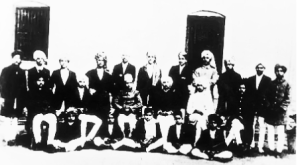
Echoing Shaheed Bhagat Singh, there is an urgent need for students to understand the broader socio-political scenario their academic experiences are embedded in. It is high time for students to unite and organise themselves, armed with the ideas of Bhagat Singh to fight against injustice.