
Karnataka’s education system, over the past few years, shows the decay of public schools and colleges. Poor results in schools and heavy commercialization of education make clear how the government’s policies deepen class divides and keep education inaccessible.
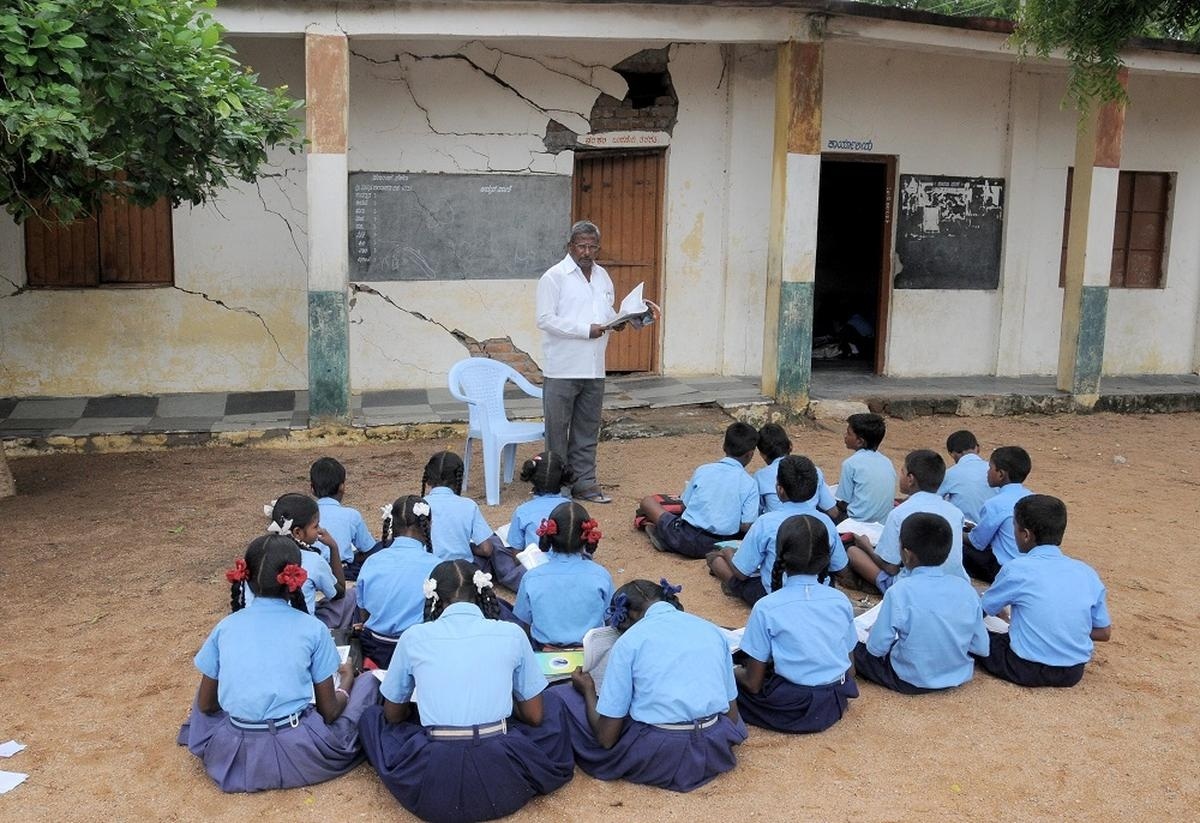
SSLC (10th state board exam) pass rates dropped to 62.34% in 2025 from 73.46% in 2024 and 83.89% in 2023, 10% fall each year that reveals basic failures. The state government, instead of looking into improving the quality of education, dealt with this by reducing the passing marks by 10% and increasing grace marks by 10%. ASER 2023 shows that fewer than 70% of 14-16-year-olds can read class 2 Kannada text and under 40% can do simple division. Karnataka also scores low on the national Performance Grading Index (PGI). Around 25-26% of teaching jobs in primary and high schools stay empty, filled by temporary guest teachers. Lack of infrastructure like poor buildings, toilets, drinking water supply, and electricity causes students to drop out. In response to falling enrollment the government plans to close 25,000+ schools and merge those with 700 Karnataka Public Schools (KPS), a model similar to Kendriya Vidyalayas, funded by a ₹2,000 crore loan from the Asian Development Bank, likely with fees that will exclude poor families.
Government schools are systematically weakened so that students shift to private ones, where nursery fees reach ₹1.5-2 lakhs and parents take loans on EMI and are trapped in debt. The state average, with RTE compliance rate at 23.6% as compared to the national average of 25.5%. In 2024-25, only 1.45% of Karnataka’s Gross State Domestic Product was spent on education.
Higher education follows the same path. The enrolment rate is 36.2%, as many students are forced to discontinue education after high school. Only 31% of pre-university colleges are run by the government, private ones take the rest. Renowned state universities in Mysore, Dharwad, and Mangalore run on less than 30% of faculty requirement. Government First Grade Degree Colleges heavily depend on guest lecturers who are underpaid, without any job security, relieved and forced to reapply after every semester. Students miss classes for months in the beginning of every semester which makes many turn to gig-work during that time. This way, our education system maintains the status quo instead of challenging it. Earlier, a management quota was introduced in the University of BDT College of Engineering, Davanagere. 50% of the seats were reserved to students who could pay double the fees of a regular student. This move to introduce management seats in a government college was protested by the students.
The BJP in Karnataka was quick to bring in NEP 2020 in 2021 which encouraged private control. The Congress government scrapped it in 2023, but years later, no new state policy exists. Bans on student unions in universities suppress student voices. They are replaced by selected councils that side with college administrations instead of fighting for issues like fee hikes, staff shortages, or special seats for payment. Students are left with no real platform to address their issues.
The government makes education a commodity for those who can pay. Low spending, school closures, no faculty recruitments, rising fees, and paid seats, all keep most people out. While NEP 2020 pushes this across India, Karnataka’s nominal scrapping of NEP does nothing to stop private takeover.
Real change means more funding, 6% of state income towards education to be spent on permanent teachers, regulation of exorbitant private fees, bringing back student unions, and fixing infrastructure. 25% of the total budget must be earmarked for education. Without this thrust, the influence of imperialist banks like ADB and World Bank will only strengthen over time. We need to push back against a system that keeps inequality alive and turns education into something only the wealthy minority can access, perpetuating the existing divides of inequality in the society.