

The astounding silence of a minister of a fascist government while students died by suicide was the moment many of the upper-middle classes got a shocking, unsettling thought: “is our democracy dying?”. The question itself reveals a presumption that democracy was alive, until reality knocked on their own doors. For millions across this country, be it post-1947 or before, democracy or not, their existence has been about survival. The stifling of democratic rights too have been tightening with passing time.
This stranglehold is perhaps most visible in our educational institutions. Universities have historically been imagined as spaces of debate, dissent, and political activity. Today, they are being reshaped into factories producing employable and obedient subjects rather than politically and morally conscious individuals. Democratic student spaces are violently shrinking through suspensions, police complaints, restrictive codes of conduct, and weakened or absent student unions. Elections are indefinitely postponed, political organising is discouraged, and fear has become institutional policy. In Karnataka, student unions have been banned for more than three decades. Recently, the state budget included reviving union elections, but no concrete steps have been taken on ground.
Depoliticising campuses has become one of the most successful projects of authoritarian forces. Students are repeatedly told that politics does not belong in universities even though it is those very policies that determine their futures. A campus without politics is not neutral; it is merely a factory manufacturing those in favour of the status quo. The ruling classes have always feared the politically conscious masses because history has shown that when people organise, empires crumble.
Rampant fee hikes continue to make education inaccessible for millions. Placements grow increasingly uncertain amidst rising unemployment. Faculty recruitments remain inadequate while public education is increasingly privatised and deprived of resources. Schools and colleges across the country continue to face closures and budget cuts.
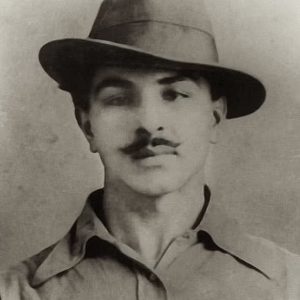
It is this simmering anger against the system that brought lakhs of students and young people onto the streets spontaneously in various cities and towns, despite brutal state repression. The Gen-Z today are carrying ahead the history of the glorious struggles waged by past generations of students and youth. At every point in history, it was the Gen-Zs of their time that stood against injustice. From Bhagat Singh and his comrades, to the youth who sacrificed their lives during Naxalbari, from those who resisted colonial rule to those who stood against CAA-NRC, the youth have always stood at the forefront of progressive struggles.
The struggles unfolding within campuses today cannot be separated from the larger struggles being waged across the country against the erosion of democratic rights. And the response of the state remains predictable. Where else have we seen this scale of police atrocities? Everywhere in India. Not to normalise it in any way, but these are day-to-day occurrences in Kashmir, Manipur, Bastar, and other regions the Indian state calls ‘conflict zones’; conflicted because the demands of the people there do not sit well with the rulers. The conflicts are not between equal opponents, but between people demanding rights and a towering state determined to suppress them.
From Chennai, where sanitation workers protesting privatisation were assaulted and detained by the police, to the rampant detention of Kashmiri youth over mere suspicion, voices are jailed, fired at, or killed. The people of this country have been living through internet lockdowns, militarisation, bulldozers, and violence. Section 144 criminalises collective action. The UAPA imprisons dissenters for years without trial. Extraordinary laws like the Armed Forces (Special Powers) Act continue to normalise militarisation and impunity.
As another ‘toll of the midnight hour’ approaches, we are once again asked to celebrate our ‘freedom’. But looking around us, one cannot help but ask: who is free in India? Freedom for whom? Democracy for whom? If democracy means uninterrupted corporate expansion, we are living in it. Democracy for bigshots like Adani and Ambani thrives. For everyone else, democracy has become a question of survival.
Fascism is the art. Who is the artist? It is the police, the military, the executive, the legislative, and the courts. They have always functioned to defend the interests of the ruling classes. Workers are beaten for striking, students face arrests and sexual assault in custody, activists are killed in encounter killings, and entire communities are held at gunpoint in the name of development.
This is not unprecedented in history. Fascism emerges during moments of deep economic and political crises, when the ruling classes seek to preserve their power through suspension of basic liberal democratic rights. Nazi Germany taught us that fascism does not arrive overnight. It is built patiently through propaganda, stifling of communist organisations, the destruction of democratic institutions, attacks on minorities, criminalisation of dissent, and the cultivation of fear.
Today, the authorities ask us to remain apolitical, to co-operate with our oppressors, and to negotiate peacefully while they drop all pretense of upholding the constitution. Gandhian methods of protest will be effective only when the viewer can be moved by the voluntary suffering of those protesting. Today, the state no longer has any iota of moral obligation to the people. The solution then lies in overthrowing this tyrannical system with one that is genuinely built on the principles of democracy for the majority. This is no utopia. Historically, Russia and China have shown us the possibility of this.
The march towards people’s liberation has been ongoing, with its own ebbs and flows. Every right we enjoy today is the product of the blood and sweat of thousands before us. The task therefore is not to merely reclaim a democracy that never belonged to us in the first place; but to build one that does- one for the workers, peasants, students, and all the oppressed! We have stood against fascism before, we will continue to do so! Democracy will be won only because the people refuse to surrender it!