

On 12th March 2025, the Greater Bengaluru Development Authority (GBDA) sent preliminary notices of land acquisition to the farmers of Ramanagara district to build a Greater Bengaluru Industrial Township (GBIT), popularly known as the Bidadi township. The project will acquire more than 9,000 acres of land across 10 villages, including Allalasandra, Kanchugaranahalli Kaval, Gollarapalya, Kempaiahnapalya, Bannigere, Byaramangala, Mandlahalli, Hosur, and Vaderahalli. As a result, 10,580 farmers (53,000 people, including family members) will face displacement.
Since the coming of the neoliberal reforms in the 1990s, India has become a dumping ground for foreign capital, with Bengaluru emerging as one of its epicentres. The city has since witnessed various forms of capitalist ruination. This project in particular seeks to turn the area into a gated city with AI data centres and industrial hubs for IT honchos requiring lakhs of liters of fresh water to be pumped from the water table below this fertile land.
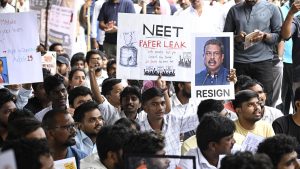
Naturally, this has triggered more than 450 days of protests by the farmers. With the protesters refusing to be deterred by the usual police gimmicks and FIRs, coupled with the recent media attention that the protest has received, the ruling Congress regime has flung a few of its age-old justifications before the people: first, that the land is barren, second, that there are very few to no farmers in Bidadi, and third, that the project will bring ‘development’ to the lives of the people.
State, serving as a transit point for the Maharajas of Mysore, with ‘Bidara’ meaning a resting place. Loyal to the Maharajas were the dominant agrarian and warrior caste of South Karnataka, the Vokkaligas, a caste name that means cultivator or householder. Today, home to some of the most powerful landowners, the rural elites, administrators, and farmers, numbering over 50% of the population, the Gangadikara Vokkaligas, tracing their lineage to the Western Ganga Dynasty, remain deeply entrenched in the social fabric of the district of Ramanagara. Their significance continues to extend to whoever comes to power in Bengaluru.
D.K. Shivakumar, a well-known Vokkaliga face of the Congress, is well aware of this. Thus, it is a baffling coincidence that the project is being pushed in a rival constituency next door to his own stronghold of the Vokkaliga-dominated Kanakapura. In this context, H.D. Kumaraswamy of the Janata Dal (Secular), another well-known Vokkaliga strongman from the region, now presenting himself as the major opposition to the project and urging farmers not to give up their lands, was in fact the one who first proposed the project in 2006. Thus, it becomes evident that, for these politicians, irrespective of party affiliation, their loyalty to finance capital outweighs their loyalty to the communities they claim to uplift.
The myth of the barren land
Nobody is doing agriculture. There are no farmers there. Maybe there might be one or two or perhaps 10 or 20.
– D K Shivakumar
When one enters the affected region, all one can see is lush green cover stretching out in every direction. The area is so verdant that one of the villagers told us that greenery rivaling this can only be found in Malenadu. With its highly fertile lands, the region is an agricultural powerhouse. It is home to 83,536 arecanut trees, 87,903 coconut trees, 12,550 mango
trees, 2,344 chikoo trees, and 306,506 banana trees. The region also has 231 acres dedicated to ragi cultivation, alongside several other acres used for the production of paddy. Ramanagara is home to one of Asia’s largest cocoon markets, with 3,381 hectares of land under mulberry cultivation. In addition, the region has a substantial dairy industry, producing nearly 6 lakh liters of milk every month. To describe such a region as ‘barren land’ is collective gaslighting.
Land, ownership, and labour
The region has both landowners and landless labourers. Among the landowners, around 70% possess between 10 guntas and 1 acre of land (20 guntas = 1 acre), 15% own between 1 and 2 acres, 10% own between 5 and 10 acres, and only 5% own more than 10 acres. There are no large landlords in the region.
The landowners themselves, along with their families, work on their fields and hire landless labourers depending on seasonal requirements. For example, in tender coconut production, labourers are employed for coconut plucking and transportation to markets, earning wages of around ₹500 per day. Women are predominantly involved in dairy-related chores. Landless labourers are dependent on the income that comes from agriculture based on tenancy, wage labour, or on slaughtering and cleaning animal waste.
Most of the landowners belong to the Vokkaliga community,
while the landless labourers largely come from marginalised caste backgrounds.
Irrigation, machinery, and fertilisers
Some of the upper-middle farmers were found to reinvest a significant portion of the surplus generated from agriculture into improving their productive capacity through irrigation, machinery, seeds, insecticides, and fertilisers. Many farmers have invested in sprinkler systems, drip irrigation, and other forms of sustainable agricultural infrastructure. With regard to tractors, only around 20% of farmers own equipment, while the rest rent it from them. Along with tractors, farmers invest in machines such as cow-milking machines and wool-cutting machines. There is also a growing tendency among landowners to invest in machinery to reduce their dependence on labourers. There are no government schools in the area, and hence, a large part of the earnings go into the education of the children and towards maintaining their lifestyle.
The government has discontinued various subsidies for fertilisers, forcing the farmers to pay higher retail prices.
Loans, markets, and economy
When it comes to loans, there exists a system of cooperation where the landowners among themselves give out loans to each other for minimal to no interest, on a principle of mutual aid and barter. The interest increases the lower one goes down the social ladder. The SKDRDP (Shri Kshetra Dharmasthala Rural Development Project), informal money lenders, and local microfinance institutions offer loans at interest rates ranging from 5% to 9% per month.
Agricultural produce from Bidadi is sold in Bengaluru’s KR Market (Krishna Rajendra Market) and Banashankari Market, given the absence of the APMC and MSP framework. Price determination is largely informal, depending on the total volume of incoming produce, weather conditions, and the perishable nature of the crops.
Landless labourer family
A landless labourer family we spoke to, cultivating 30 cents (0.01 acre) of leased land, reported severe financial insecurity due to rising cultivation costs, crop losses, and fixed annual rent payments of ₹20,000 to the landowner regardless of output. The family relies on loans from self-help groups, chittis, and landlords to meet cultivation expenses, leading to persistent indebtedness. To supplement household income, at least one family member undertakes wage labour, while their son works in a biscuit factory alongside farm work. Despite illness or other hardships, family members are often compelled to continue working due to economic necessity.
The myth of development
While addressing this question of development, first and foremost it is important to address the government’s narrative that 80% of the farmers have understood the need for this AI city and have consented to it, while only a small, uninformed section is mindlessly resisting. The government has, till now, provided no credible evidence to substantiate this claim.
While considering this argument, one question naturally comes to mind: does the government really think that farmers are foolish enough to fall for slogans such as “Farmers as Partners in Progress” or “The Future of Bengaluru Begins Here”? The farmers have already seen what happened in the neighbouring Bidadi Industrial Area (BIA), established over three decades ago. It does not employ the children of those whose lands were acquired for its construction. Those who have found employment, primarily the children of landless peasants and petty farmers, are largely confined to insecure sanitation and other low-paying jobs in the heavily polluting factories of the BIA. The farmers are well aware that only a small section of the English-speaking elite, armed with degrees from the costliest institutions, will be able to thrive in such an AI city.
The scale of environmental destruction that this project would unleash is also well understood by the farmers. They know that the greenery they have seen all their life will be gone; around 200,000 trees will be felled. In the era of social media, they are well aware of how much the farmers of Virginia and Ohio suffered under these AI city projects and data centres; it will suck the groundwater dry. They themselves have seen the way the Vrishbhavathi river was ruined. The sewage and untreated effluents from so-called world-class factories of companies like Toyota Kirloskar, Parle, Bosch, Hindustan Coca-Cola, Featherlite, and Motherson have turned the Vrishbhavathi river into a foaming, fetid, toxic deluge for those downstream.
Another narrative to be debunked here is the claim that such projects ought to be built in North Karnataka, which is underdeveloped, to create development there. But it is to be understood that these projects, by their very essence, were never meant for the development of the poor toilers who make up the majority of our country. These capitalists come from foreign countries all the way to oppressed nations like India with only the notion of exploitation and pocketing as much wealth as possible. These projects destroy the environment and self-sufficient local economies, thus generating hordes of cheap labourers to be further exploited. We have seen what foreign investments and industries can do, ever since the days of the East India Company. These are not development projects but should rather be called ‘underdevelopment projects’.
The struggle
Ever since the preliminary notices were issued, the farmers have been protesting. Byramangala has emerged as the epicentre of the resistance, with an ongoing protest that has continued for more than 450 days. The farmers have been sitting under a shamiana made through an act of defiance, which has cost them FIRs. They have also organised rallies and roadblocks. Similar events are unfolding around land acquisition at Anekal too (refer to the Nov, ‘25 issue).
With the final notices in June, the protests have only intensified. Many activists and organizations have been joining the movement, and the protest is gaining increasing attention in both the state and national media. Coupled with the victory snatched by the Devanahalli farmers last year, this saga of resistance is nowhere to be stopped!