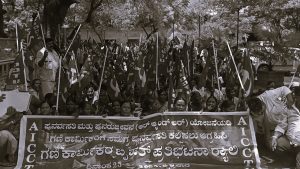


On January 17th, 2025, K. Jagabar Ali was brutally run over in a planned killing. Ali, an environmental activist was, among many others, a whistleblower who had repeatedly petitioned against rampant illegal quarrying in Tamil Nadu, by companies like RR Quarries. His death, which was immediately dismissed as an accident, revealed the extent to which the mining mafia operates with impunity. He had accused, with evidence, local officials, of leaking his complaints, exposing the tight-knit relationship between administrative power and corporate interests. His murder triggered state-wide protests, underlining the dangers faced by those resisting illegal exploitation.
Tamil Nadu’s mining sector has come under increasing scrutiny due to increasing evidence of illegal operations, environmental degradation, and a strong nexus between mining cartels and state authority. Illegal quarrying, especially of sand and granite, has ruined large landscapes across Tamil Nadu. Unregulated extraction has dried up water sources, eroded fertile agricultural land, and destroyed biodiversity. In many districts, including Salem and Madurai, quarries operate without environmental clearance, enabled by the complicity of authorities. In Madurai, over 10,000 farmers and villagers protested in January this year, against a proposed tungsten mining project near Arittapatti Biodiversity Heritage Site. This is just one among the multiple protests held across Tamil Nadu, with the desperate call from the people to put an end to the illegal mining that is detrimental to the people’s needs and well-being.
The state, on the other hand, pursues mineral monetization through a new legislation that aims to generate Rs.3,450 crores by taxing mineral-bearing lands. While framing it as a step towards transparency and establishing the direct overview of the state in the matters of mining, it is clearly an effort to legitimize destructive mining practices by legally bypassing systemic corruption and environmental destruction. Further-more, as a band-aid solution, the mining department has proposed a digital survey using GIS and drone mapping to regulate small mineral minings. Past records show that given the deep nexus between mining corporations and the state, irrespective of the ruling party, these solutions will not help the crisis posed by illegal mining and unregulated mineral extraction.
Mineral-rich regions, in and out of Tamil Nadu, have always been the supposed promised lands for economic development. In reality, people’s voices are silenced violently, as we recently saw in the murder of Mukesh Chandrakar, a whistleblower who exposed corruption in road construction. In each instance we are met with the reckless operations of capitalism, backed by the state and its machinery, either by providing protection or by keeping their mouths sealed.