

Protiva Kundu (Economist)
This year Union Budget 2024-25 was a vote on account. A budget of Rs. 47.65 lakh crore has been projected for 2024-25, which constitutes 14.5% of country’s GDP. The budget also projected record growth in central tax revenue collection at Rs. 38.3 lakh crore, 14% increase from the previous year’s budget estimates.
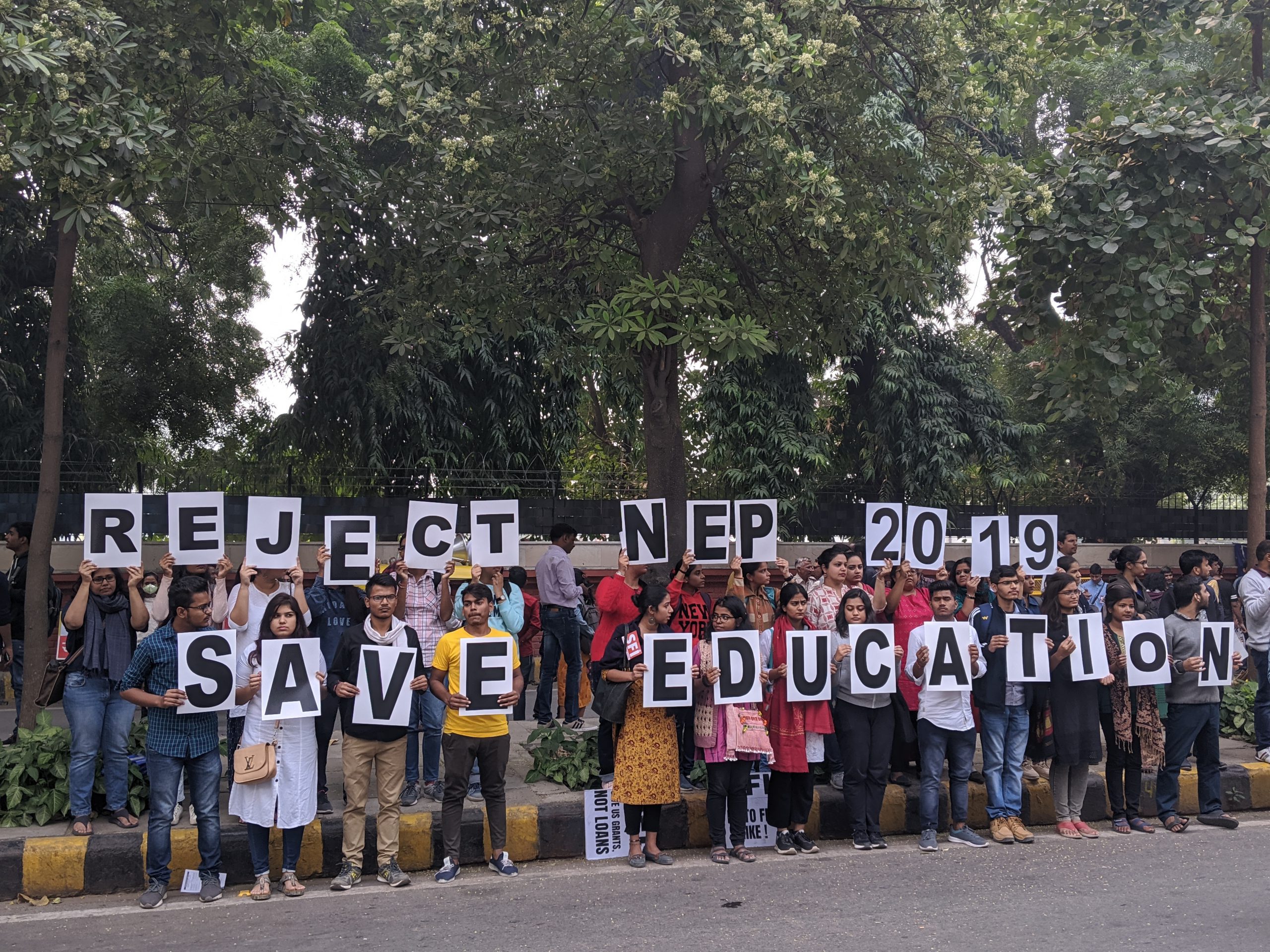
In this backdrop, Ministry of Education has been provided a budget of Rs. 1,20,628 crore, of which Rs. 73,008 crore is allocated for the Department of School Education and Literacy and Rs. 47,620 crore for the Department of Higher Education. This is a 6.8% increase from last year’s budget estimates. However, the share of education in the total Union Budget shows a continuous decline – 3.3% in 2019-20 to 2.5% in 2024-25(I)(BE). The pandemic has devastated millions of students, a large number of students are still struggling with learning as highlighted in the ASER survey report 2023. Instead of some budget boost to overcome the COVID-induced collapses, a declining share even from the pre-pandemic period is a concern. While the demand for 6% of GDP for public (Centre and State combined) education is getting reiterated in every policy document including National Education Policy (NEP) 2020, Union Ministry of Education’s contribution equivalent to 0.37% of GDP towards the sector, indicates that Union Government is shifting the responsibility of education financing more towards State governments. As States also have limited revenue mobilisation capacity, it is very unlikely that States will be able to step up investment for the sector. While the NEP is advocating for higher public funding for education, the discussion of NEP in the budget without any supporting fund, undermining the implementation of the proposed policy. The budget speech hails youth and‘their needs, their aspirations, and their welfare’ as the highest priority for the government. However, a closer examination of the current interim budget and the pattern of spending for the last few years shows a shifting policy priority in the higher education domain. As per the latest All India Survey on Higher education 2021-22, there are around 1,168 universities/university level institutions, 45,473 Colleges and 12,002 stand-alone institutions catering 4.33 crore students. However, the budget shows a skewed resource distribution towards select institution of eminence including 23 Indian Institute of Technologies (IITs), 7 Indian Institute of Science Education and Research (IISERs), 56 central universities and around 11 World Class Institutes which cater to a handful of students. On the other hand, University Grants Commission (UGC), which plays a crucial role in promoting higher education through funding government run regular colleges and universities has witnessed a 61% budget slash from the previous year budget estimates. The other key centrally sponsored scheme, Rashtriya Uchchatar Shiksha Abhiyan (renamed as PM-USHA), responsible for providing strategic funding to state higher and technical institutions, has been allocated Rs.1815 crore in 2024-25(I)(BE). While the budget is 21% higher than 2023-24(BE), there is only Rs. 500 crore released in 2023-24, asobserved from the revised estimates. In 2016, with introduction of Higher Education Financing Agency (HEFA), already there was a shifting responsibility of funding infrastructural work from government to the public institutions who were advised to take loan from HEFA to finance required infrastructures. This reflected in fee hikes in many institutions; the further budget cut will burden students further especially those are from socio-economically disadvantaged background and highly dependent on public provisioning of higher education. While financial aid to students can help to some extent to reduce the increased cost of education, a decrease in allocation for Students Financial Aid programme(1) in this interim budget will adversely affect the students.
The outcome at higher education whether it is enrolment, retention, or transition from education to work is strongly linked to the outcome at school level. However, a similar form of funding pattern is observed also for school education (Standard I-XII). The rate of growth in allocation for so called government-run model schools including Kendriya Vidyalaya, Jawahar Navodaya Vidyalaya and PM-SHRI shows an increasing trend as compared to schools which are funded through ‘Samagra Shiksha Abhiyan’ (SMSA), a centrally sponsored scheme(2) for holistic school education. While around 30 per cent of the school education budget has been allocated towards these three types of model schools, they cater only around 20 lakh students. On the contrary, SMSA caters more than 20 crore students constitute 51% of the school education budget.
We already have crossed the halfway mark between the adoption and finish line of the 2030 Agenda for Sustainable Development Goals and completed four years of NEP 2020. To realise the NEP 2020 recommendations for universalisation of education from pre-primary to higher secondary level and a Gross Enrolment Ratio of 50 in higher education by 2030, the sector needs substantial investment for all crucial components of quality education including teaching and non-teaching staff, teachers’ training, infrastructure, scholarships and incentives for students. Being one of the youngest nations in the world, to reap the benefits of ‘demographic dividend’, India also needs to work on improving overall employability of the youth. An inclusive and equitable financing should be the core of all the investments towards the sector to ensure every learner is included in the process. However, how India fares in the coming years will depend a lot on the governments’ commitment towards the sector. We need to wait till the full budget for 2024-25.
Footnotes: 1-(comprises of interest subsidy, scholarship for college and university students, PM Research fellowship, PM Uchchatar Shiksha Protsahan, and special scholarship scheme for Jammu & Kashmir) 2-Schemes designed and funded by both Union and state governments and implemented by state governments. (Views are personal)


