

“No one is born with hate in their heart. Hate is something that has been taught. It is not an innate survival skill that we need; It is a form of stupidity that penetrates our minds and will eventually destroy us.”
– Frank Iero
Here are some facts:
(i) Maulana Abul Kalam Azad was India’s first Education Minister and led key reforms such as free and compulsory primary education for all children up to 14 years.
(ii) Jammu and Kashmir (J&K) had acceded to India based on a promise that the State would remain autonomous.
(iii) Mahatma Gandhi was assassinated by Nathuram Godse, a Hindu nationalist and member of both the Hindu Mahasabha and the RSS. Post
this, the government imposed a ban on the RSS to “root out the forces of hate and violence” at work in the country.
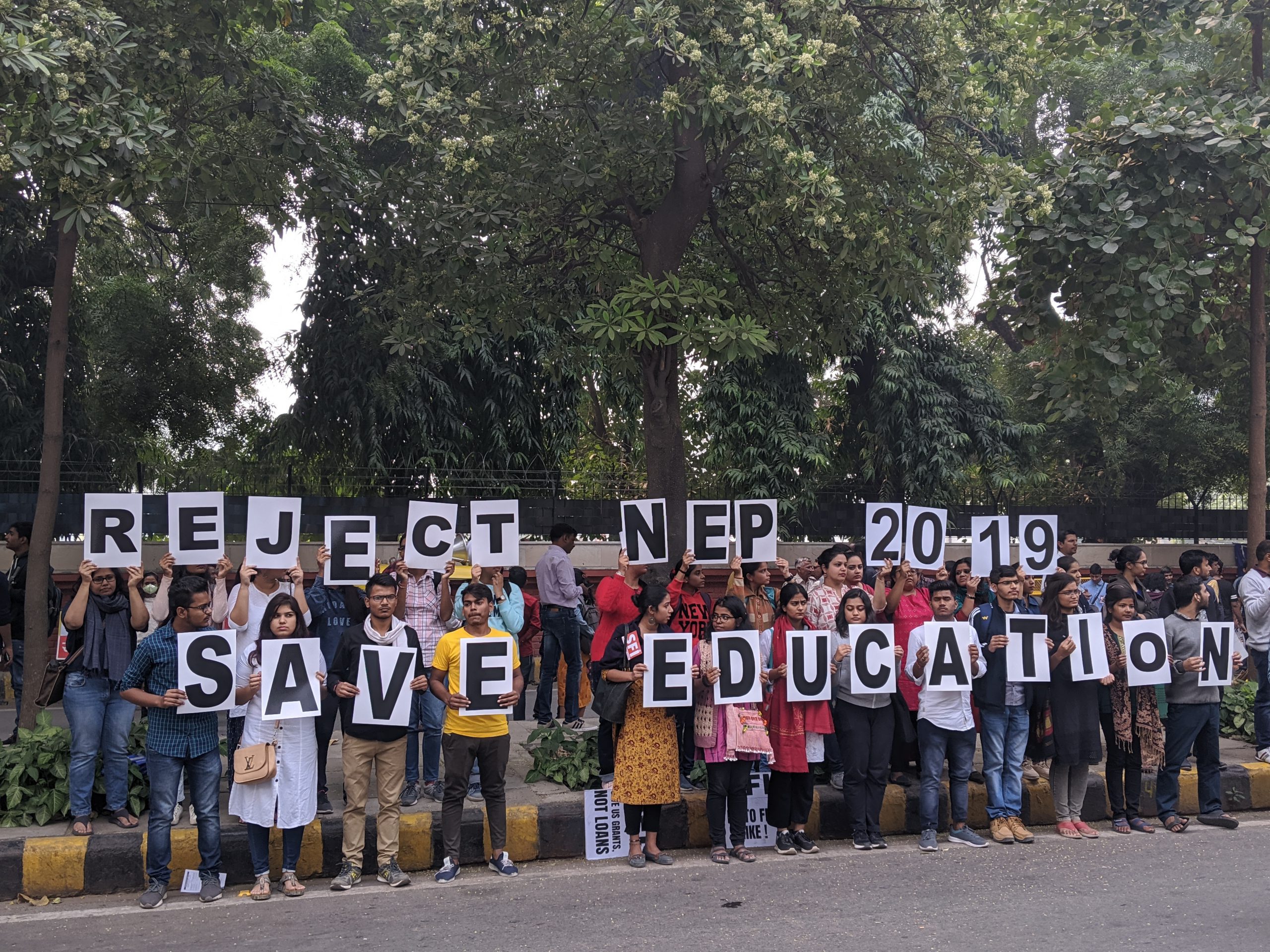
But according to NCERT and based on the recent so called ‘rationalization’ of the history, sociology and political science textbooks for high school, it is as if these things never happened. Content on the Mughals and themes such as ‘Understanding Partition’, ‘Rise of Popular Movements’, ‘Dalit Poetry’, ‘Democracy and Diversity’ as well as mention of the Gujarat pogrom of 2002, and the Vidarbha water crises have been removed. The deletions seem to be all too selective and precise in what is being omitted. The NEP 2020 talks about teaching scientific temper as well as values like liberty, pluralism, equality and justice. Then how can a whole culture and a whole civilization that is integral to India be erased? Several educationists and historians have commented that this has nothing to do with history or political science but has much to do with politics and a very calculated political move to distort history, building a narrative that fulfils the motives and dispensations of the present regime. A statement released by
250 prominent Indian historians on this issue suggests that there is a “larger ideological agenda of misconstruing the history of the people of the Indian subcontinent as a product of the hegemonic singular (Hindu) tradition. By reducing the study of history to such monolithic accounts, the ground is being prepared for pseudo-histories, especially of a communal and casteist variety, to hold sway.”
The textbook revisions and ‘rationalization’ of syllabus by NCERT in recent years can be looked at as a hate project. In recent writings it has been referred to as ‘cultural genocide’, and a ‘crime against humanity’. What was considered the narrative of the ‘lunatic fringe’ until a few years ago is being mainstreamed. Young minds are being poisoned to believe in a distorted history which seeks to erase any traces of inter religious mixing and syncretism. They are also being denied the freedom to think critically and are being further pushed towards rote-memorization instead of being exposed to History’s controversies, disputes and debates in a healthy manner. The intention is to demonize the Mughals, enemy ‘foreign invaders’ (supposedly ancestors to all Indian Muslims) as responsible for reigning terror on the subcontinent, thereby laying the foundation for hatred and violence that could even result in a
civil war. How can this be happening? History cannot and should not be about silencing voices, but instead exploring and uncovering as many narratives as evidence and inquiry can provide. The communalization of education reinforces existing fault lines in society and further polarizes, creating an environment of tension and mistrust between different social groups. It also undermines the fundamental principles of secularism and inclusivity on which the Indian Constitution is based.
The entire exercise did not include discussions and consultations with the teams who wrote the textbooks, a consortium of educationists and historians. From a philosophy of education standpoint as well, as explained by R F Dearden, the assurance of objectivity in History lies not only in the scruples of the historian but as much in public assessment and criticism. The unwillingness of the NCERT to respond to criticism or engage in any public consultation or discussion points to a lack of objectivity, historical basis, and pedagogical considerations. This has a huge impact not only on the content but also gives rise to serious challenges with the dilution of a high school education that is already lacking sufficient rigour
and critical pedagogy. The Position Paper on ‘Teaching of Social Sciences’ published by the NCERT in 2006 states, “The social sciences carry a normative responsibility to create and widen the popular base for human values, namely freedom, trust, mutual respect, and respect for diversity . Given this, social science teaching should aim at investing in children a critical moral and mental energy to make them alert to the social forces that threaten these values.” The latest omissions are in stark contrast to these principles, values and aims and therefore the ‘rationalisation’ appears to be most ‘irrational’.
References:
(i) Dearden, R. F. (1968). Forms of Understanding. In
The Philosophy of Primary Education (pp. 61-83).
Routledge.
(ii) Deleting portions from textbooks a matter of great
concern. Countercurrents. (2023, April 10).
Hindu. (2023, April 11). Right lessons: On the lack
of professionalism in the NCERT’s deletions in
textbooks.
(iii) Sanghvi, V. (2023, April 6). Deleting history from
NCERT textbooks is lying to children. it’s also
betraying parents. ThePrint.
Deccan Chronicle. (2023, April 16). NCERT’s
revision of textbooks part of ‘saffronisation’ agenda:
Kerala CM. Deccan Chronicle.
(iv) NewIndianXpress. (2023, April 11). Erase history
from books, but it won’t leave memory. The New
Indian Express.


