
On 25 November 1949, Babasaheb Ambedkar warned that with the Constitution coming into force on 26 January 1950, India would enter a ‘life of contradictions’. He said “In politics we will have equality and in social and economic life we will have inequality. In politics we will be recognising the principle of one man one vote and one vote one value. In our social and economic life, we shall, by reason of our social and economic structure, continue to deny the principle of one man one value.”
The Constitution guaranteed political equality, while entrusting future governments with the task of dismantling the social and economic inequalities that stood in its way. But as we have seen, the SIR threatens this constitutional guarantee of universal adult franchise, and at one shot, attacks our right to vote.
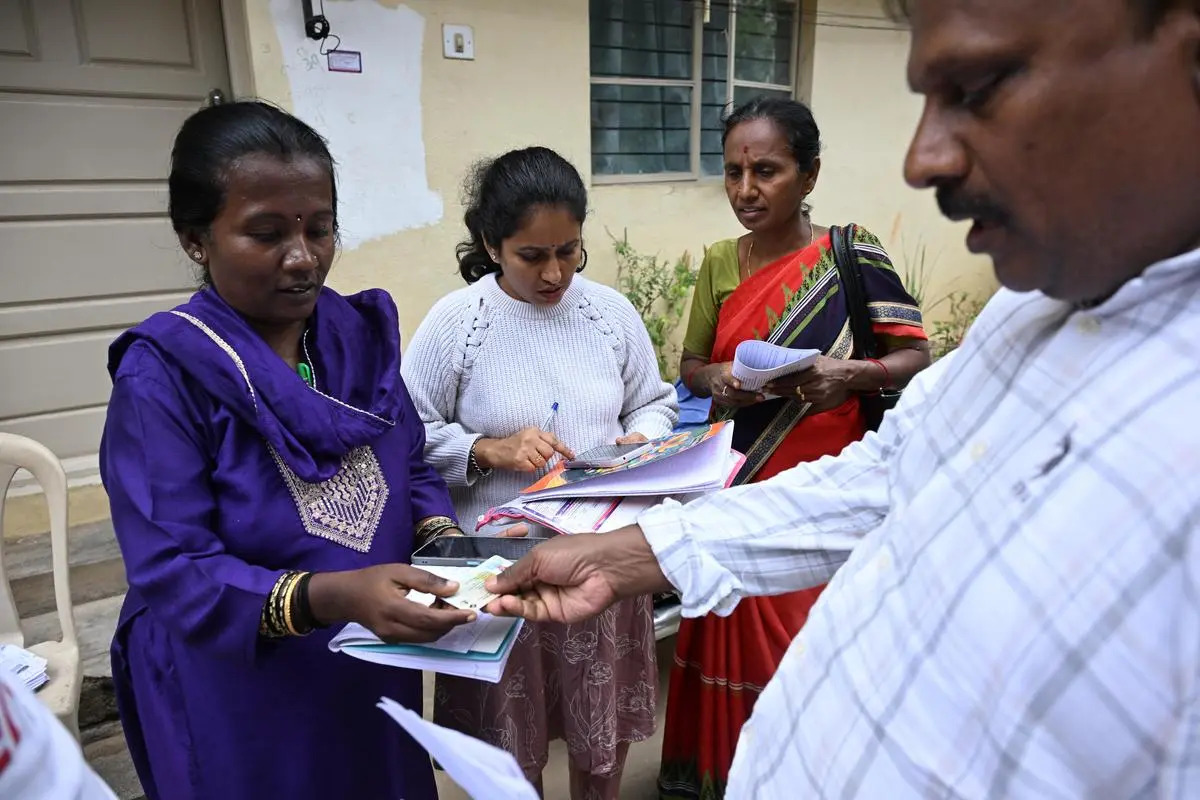
My Vote, My Right, a coalition of civil society organisations, has been assisting voters through help desks and helplines, and has regularly been writing to the Election Commission to demand transparency, accountability and proactive assistance to voters. However, our team of volunteers witnessed thousands of ordinary people reeling in uncertainty about what would happen to their vote, and therefore, other rights guaranteed under welfare schemes.
The SIR makes three dangerous assumptions: (i) that all voters have the digital literacy and access necessary to navigate the process, (ii) that the names, relative’s names and dates of birth are accurate and consistent across records, and (iii) that everyone has one of the 11 documents accepted as proof of ‘citizenship’ or eligibility in the SIR. These assumptions are abundantly clear in the actions of the CEO-Karnataka: the refusal to provide written clarifications, failure to respond to queries by civil society organisations, the lack of adequately trained officials who faced immense pressure to meet targets, the dearth of functional voter facilitation centres and the unreasonably tight schedules.
One illustration of the CEO’s apathy is the announcement of the CEO-Karnataka asking voters to submit their Forms without completing the mapping section. While technically permissible, these voters will be issued a notice demanding they show one of the 11 documents. It was extremely irresponsible for the CEO to make this announcement without informing voters of the consequences, as most people from working class, Dalit, Adivasi, and transgender communities will not be able to furnish any of these documents and will thereby lose their right to vote.
What lies ahead
The ongoing phase of the SIR is the Claims & Objections phase. From 24th August to 23rd September, all voters are expected to themselves check the draft rolls to see if they have been included or not. Every voter who had submitted their Enumeration Form should have been included, but in Karnataka, over 1.07 crore names of voters have been listed in the ASDDO categories (Absent, Shifted, Dead, Duplicate and Others), and removed from the draft rolls. The Election Commission has itself admitted that even voters who have submitted their Enumeration Forms have wrongfully been marked under this list. Due to the pressure on BLOs to meet targets of digitising forms before the deadline of 17th August, it has widely been reported that voters were deleted and marked as ASDDO with no process followed and no inquiry.
The important part to note is that these deleted voters will not receive any written communication from the Election Commission to indicate that they will be deleted from the final voter rolls. They will themselves have to search the lists online, or inquire at the office of their ERO to know their status. Then, they will all be required to fill Form 6, and enroll as new voters. While around 2.5-3 lakh names were corrected and brought back into the draft roll, the fate of the remaining voters hangs in uncertainty and the Election Commission has not given any assurance to ensure inclusion of those wrongly deleted.
The other category of voters is those who have been included in the draft rolls, but will receive notices for being flagged for ‘anomalies’ or ‘logical discrepancies’, being unmapped to 2002 voter rolls or another category called ‘Others’, which has still not been defined by the ECI. These voters will have to furnish one of the 11 documents to establish their eligibility, and in many cases, that of their parents as well. This burden will be particularly severe for marginalised communities.
The experience of other states also shows that large numbers of voters may be excluded without even being placed on the ASDDO list or the draft rolls. Voters may submit their documents and still have no assurance about what happens to their names. The coming weeks will require voters and civil society to document errors and file complaints to keep eligible voters on the rolls.
The misuse of Form 7 adds another layer of risk. Form 7 allows any voter to object to the inclusion of another person’s name on the electoral roll, but its widespread use to target Muslim voters and people perceived to support opposition parties could turn the objection process into yet another avenue for arbitrary disenfranchisement. We must also be able to keep a close eye on this in Phase II of the SIR.
Civil Society as Watchdog
As civil society, we have a responsibility to ensure that the Election Commission knows that it is being watched. Various groups have already played this role proactively during the Enumeration Phase, continuously flagging issues on the ground from the exclusion of the transgender community, to problems faced by sex workers, to the need to protect BLOs from unreasonable work pressure. These groups also pressured the CEO, Karnataka, to facilitate the filling of forms for voters. The pressure exerted by groups like My Vote, My Right also ensured that the Election Commission published the ASDDO list. In a response to an RTI application seeking information on the definition of “logical discrepancies”, the ECI responded that this information is not available with the Commission! It is shocking that the Commission is disenfranchising millions on the basis of a process that it could not define!
The work of citizen-led campaigns is what has forced the Election Commission to issue some clarifications, and in some rare cases, remain transparent. The scale and ramifications of the exercise makes this vigilance even more important. Across the 10 States and Union Territories where SIR has been completed, 7.69 crore names have been excluded from the post-SIR final electoral rolls. While some voters were subsequently added back in the Claims & Objections phase, the Election Commission has provided no clear account of who was added, why they were added, and who remained excluded.
In a democracy, the government cannot choose its voters; it will amount to a fundamental inversion of the electoral process. The State has a responsibility to ensure that every eligible citizen is proactively included in the electoral rolls. The SIR, however, operates on the principle of mass disenfranchisement and not inclusion. Consistent intervention of citizens’ groups and communities is what will be key to defeating this concerted effort to disenfranchise citizens exercising their most basic democratic right.
(Aishwarya Ravikumar and Poorna R are part of the My Vote, My Right campaign)