

Anti-communists, bourgeois historians, and fascist propagandists have long used various myths and distortions to malign the achievements of the great Soviet people during the period of socialist construction under the leadership of Comrade Stalin. One of the most prominent of these claims is the allegation that Stalin deliberately imposed a famine and starved the people of Ukraine during 1931-1933, an event popularly referred to as the Holodomor. This article mainly seeks to examine the historical roots and sources of the famine.
In 1933, against the backdrop of rising fascism across Europe, the Nazi Party newspaper Völkischer Beobachter published an article claiming that ‘Bolshevik Jews’ had manufactured a famine in Ukraine in order to kill millions of Ukrainian Christians. This marked the first major source of the Holodomor narrative. The claims gained further legitimacy when Theodor Innitzer, the Nazi-aligned Cardinal of Vienna, organized relief efforts for Ukraine, asserting that starving Ukrainians had appealed to him for assistance. American journalist Anna Louise Strong then had predicted that these sustained propaganda efforts were intended to legitimize a future Nazi invasion of Ukraine, which ultimately did occur.
As the Soviet Union increasingly promoted initiatives such as united fronts against growing fascism and sought entry into the League of Nations, Nazi propaganda intensified. The Nazis approached William Randolph Hearst, owner of one of America’s largest newspaper empires, and described by many working-class Americans at the time as ‘America’s No. 1 Fascist’. It is important to note that Hearst had celebrated the ‘great achievements’ of the Nazis, and asked his reporters for positive coverage of the Nazis, and fired journalists who refused to do so. His magazines and newspapers frequently published the articles of fascist leaders such as Mussolini, Hitler, Göring, and other dictators. He praised Hitler as ‘saviour of Europe’ and celebrated Hitler’s attack on the Soviet Union, and asked other European countries to support Hitler against communism.
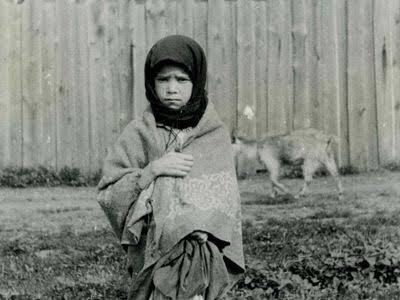
During a trip to Munich in 1934, Hearst signed a business agreement worth one million German marks with the Nazi Party. A few months later, on February 18, 1935, a series of articles appeared in the New York Evening Journal written by a mysterious man named Thomas Walker. Walker claimed that he had traveled through Soviet Ukraine and witnessed six million people being deliberately starved and killed by the Soviet government. Alongside these reports, photographs depicting dead and starving bodies were published.
When reports of the famine emerged and created a huge sensation in America, some of the earliest rebuttals also came from journalists working within the same capitalist-owned media establishment. Journalist Louis Fischer wrote in the March issue of The Nation that, according to official records, the man known as Thomas Walker had remained in the Soviet Union for only 13 days, from October 12 to October 25, 1934, and had spent his time several hundred kilometers away from Ukraine. Journalist John Casey investigated the authenticity of the photographs published alongside Walker’s reports and found out that many of them were not from Ukraine at all. Several images were traced back to the Volga Famine of 1921-1922, while others originated from different parts of Europe during World War I. Meanwhile, Walter Duranty of The New York Times dismissed the claims of famine, and said that available evidence showed 1933 to have been one of the best harvest years for Ukraine. It is worth noting that Lindsay Parrot, Hearst’s correspondent in Moscow, also had the same observation about Ukraine’s harvest in 1933. The Hearst press was not able to counter these criticisms, and the campaign gradually lost momentum after it was revealed that ‘Thomas Walker’ was himself a fraud. His real identity was exposed as Robert Green, an ex-convict.
As the American cycle was going on, parallelly in Germany, the Nazi party was producing its own propaganda. One of the most significant works to examine in this context is Human Life in Russia, written by Nazi-backed journalist Ewald Ammende. The book was about the Ukrainian famine. The book used the photographs and accounts of Fritz Ditloff, director of the German Government Agricultural Concession in the North Caucasus, to substantiate its claims. The same images, which appeared in articles of the Hearst press, were to be seen here this time, claiming they were taken by Ditloff. But with Ditloff, the Volgan roots of the images could be understood, as he was posted as a relief worker in Volga during the 1921 famine.
A number of influential books and publications, such as Black Deeds of the Kremlin; Nahayewsky’s The History of Ukraine; Dalrymple’s The Soviet Famine of 1932-1934; Dushnyck’s The Famine Holocaust in Ukraine; Woropay’s The Ninth Circle; documentaries such as Peter Ustinov’s Russia and Harvest of Despair which was funded by the National film board of Canada; and government publications, such as Communist Takeover of Ukraine, produced by the Select Committee on Communist Aggression in 1954, were all built upon the foundations of the Walker/Ditloff fabrications. Though after the fall of Nazi Germany, the Holodomor campaign as a whole faced a setback, it eventually revived itself in the Ronald Reagan era, with several million dollars spent on anti-communist propaganda. During this time, the Ukrainian Research Institute was established at Harvard, providing unprecedented intellectual and academic backing for the famine theory. It was from this backdrop that the famous anti-communist writer Robert Conquest emerged.
While analyzing the ‘Harvard era’, historians such as James E. Mace, Robert Conquest, and Lev Dushnyck, it becomes evident that the frequently cited death toll of six million is derived from statistical distortions. These historians often compare the Soviet census of 1926 with the census of 1959 in order to argue that millions perished as a result of the famine.
However, such analyses fail to adequately account for several major historical factors. Large parts of Ukraine were occupied by Nazi forces and became major battlegrounds during World War II. For example, the city of Kharkov, which had a pre-war population of around 700,000, lost nearly half of its inhabitants during the war years. In addition, between 650,000 and 700,000 Volga Germans migrated during this period, while certain groups, such as the Kuban Cossacks, were reclassified in Soviet demographic records from Ukrainians to Russians.
According to the 1926 census, there were approximately 25 million ethnic Ukrainians living in Ukraine. If six to seven million had truly died in the famine, and another five to ten million perished during World War II (as is widely acknowledged), then the remaining ethnic Ukrainian population by the late 1940s would have been drastically reduced. Yet the 1979 Soviet census recorded Ukraine’s population at approximately 49.7 million. Thus, it raises a question: how could the population have recovered and expanded so rapidly if the famine had truly occurred?
The Holodomor campaign is still very much alive (and gained popularity again with the Russia-Ukraine War), with dozens of propaganda pieces being pumped out every year. However, none of them have any conclusive proof to substantiate the claim, and all of it is built over the same Walker/Ditloff fakes and Hitler/Hearst era lies. Thus, the Holodomor to this date remains a hoax, which philosopher Aymeric Monville calls “the famine that feeds the West!”. Capitalism has never achieved any development without costing millions of lives, and they also cannot think it is possible, so they keep blaming the USSR for genocide to defame the unprecedented achievements of the Soviet people.