
Emergence of Fascism in Europe
Post-First World War Europe witnessed two starkly opposite phenomena: the glorious Russian Revolution, which established the first workers’ state in the Soviet Union, and the emergence of Fascism, the most reactionary form of imperialism. The first was the result of workers’ struggle that rejected chauvinism, opposed the imperialist war, and captured power to form the first Socialist state, while the other was the result of the war, economic crisis, and the inability of the capitalist states to reconstruct their economy without exploiting other nations. The post-war economic crisis led to widespread workers’ movements across Europe. Supported by capitalists, Fascism emerged as a tool to suppress revolutionary workers’ movements and divert workers’ attention from their actual enemy, the capitalist system. The term Fascism was first popularized by Mussolini, who created a chauvinist movement to combat the growth of communism in Italy. It later reached new heights with the German Nazi regime led by Adolf Hitler. Fascist movements gained wide support in many countries, such as the United States of America, Britain, France, Spain, Norway, Belgium, Sweden, and Bulgaria, and fascist parties and regimes gained support from capitalists worldwide. Many Fascist regimes (e.g., Francisco Franco’s dictatorship in Spain) were supported by the capitalist of different countries and their governments (e.g., USA) even after World War II.
Different Trends in the International Socialist Movement
The crisis of capitalism became evident at the beginning of the 20th century, and it led to the revolutionary upsurges aimed at establishing a true people’s democracy. When this crisis led to the imperialist war (World War I), confusion emerged among the leaders of the international communist movement. Bolsheviks, led by Comrade Lenin, waged a bitter struggle against the existing opportunist and reformist trends within the then Second International. Thus, over the debate of reform or revolution, the Second International split, with the revolutionary sections forming communist parties and revolutionary trade unions, while the reformists remained as social democratic parties, participating in elections and increasingly collaborating with the bourgeoisie. These reformist social democrats later formed governments in many Western countries after the First World War, but the toiling masses grew increasingly disillusioned with reformism as it was unable to give an alternative. The disillusionment of the masses with liberal democracy, economic crisis, mass unemployment, rising chauvinism, and the failure of social democrats led to the rise of reactionary fascist parties.
United Front Against Fascism
While many bourgeois social scientists and social democrats (such as Otto Bauer and Brailsford) were unable to understand the rise of fascism and offered vague and fictitious definitions of fascism, the Communists studied the phenomenon by tracing its material roots and developed a scientific understanding of fascism.
At the 7th World Congress of the Communist International (Comintern) in 1935, Georgi Dimitrov defined fascism as “the open terrorist dictatorship of the most reactionary, most chauvinistic, most imperialist elements of finance capital” and outlined the general characteristics of the inception and growth of the fascist phenomenon :
- Fascism is one of the two major forms of bourgeois class rule. The capitalist state exists either as bourgeois democracy, where the working class has partial freedoms of speech, press, assembly, and organization, or as fascism, where these rights are either completely suppressed or in the process of being eroded.
- Fascism arises during periods of capitalist crisis; this sharp accentuation leads the bourgeoisie to shift the entire burden of the crisis onto the workers and peasantry. This, in turn, leads to increased revolutionary tendencies and uprisings among the toiling masses. It is to suppress these movements and to facilitate capitalist exploitation that fascism emerges.
- Fascist parties and organizations come to power by exploiting the failures of social democratic governments. The vacuum created by the disillusionment and disorganization of the toiling masses with bourgeois democracy is effectively utilized by fascists, who offer false promises to gain support and ascend to power.
Since fascism thrives on the chauvinist propaganda among the toiling masses, the Comintern examined it from a more self-critical angle. It concluded that, had the Communists pursued tactical alliances with the Social Democrats, workers might not have been drawn towards fascist trade unions and fascism need not have grown to this degree. They were correct in identifying the Social Democrats (SPD) as a bourgeois party and in struggling against them in general; however, they were wrong in failing to recognize the importance of a temporary, broad tactical alliance in 1933 (including the SPD) as a means of preventing the Nazis from coming to power.
In response to sectarian trends within the communist parties, the Communist International put forward the idea of a “united front against fascism.” This united front called for communists to closely ally themselves with social democratic parties in order to reach the broadest sections of the masses and organise them in a broad political, social, economic, and ideological struggle against fascism. The aim was to ultimately culminate this struggle in the formation of an anti-fascist united front government, which would restore all democratic rights of the toiling masses and thereby intensify the struggle further, advancing it towards a socialist revolution.
Soviet Union’s Preparation to Defeat Fascism
Comrade Stalin was observing the rise of fascism and preparing the Soviet Union to defend itself against fascist attack. Sensing the danger created by the fascist bloc, the Soviet Union proposed a political alliance with Britain, France, and other European countries against fascist aggression. However, the European imperialist camp considered Bolshevism a far greater threat and tried to divert the ongoing war eastward by granting concessions to the Nazis, so that the Soviet Union would have to face the fury and devastation of the fascist war machine. Instead of collective resistance against fascism, they continued to trade with the fascist aggressors. The Soviet Union urged an anti-war conference with Britain, France, Poland, Romania, and Turkey, but these initiatives failed due to the lack of willingness of these imperialist powers to form an alliance with the Bolsheviks.
In the 18th Congress of the Communist Party of the Soviet Union (1938), Stalin pointed out that imperialist powers like the United States, Britain, and France, out of fear of proletarian revolution, gave concessions to the fascist camp and formed bourgeois unity in the name of the ‘Anti-Comintern Pact’.
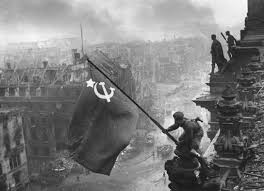
In this situation, the Soviet Union proposed a non-aggression pact with Nazi Germany, the Molotov-Ribbentrop Pact (1939), to protect Soviet sovereignty and to prepare for a decisive war. The Molotov-Ribbentrop Pact not only saved Soviet territory from Nazi aggression but also succeeded in creating a rift within the fascist camp. Mussolini of Italy and Franco of Spain openly expressed their strong disagreement with this Nazi decision. At the same time, it was a severe blow to Japan, which had intended to launch a war against Soviet Russia on the Mongolian border. Stalin’s leadership, the planned economy, and the industrial base built through the five-year plans, and the unity of party and people were the decisive factors in the Soviet Union’s victory. During this period, the Soviet Union changed the aim of the third five-year plan to prepare for an unprecedented war effort against a fascist attack. A vast military, industrial, and political mobilisation ultimately smashed the fascists.